Leave Your Message
0%

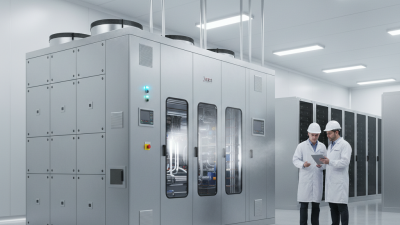
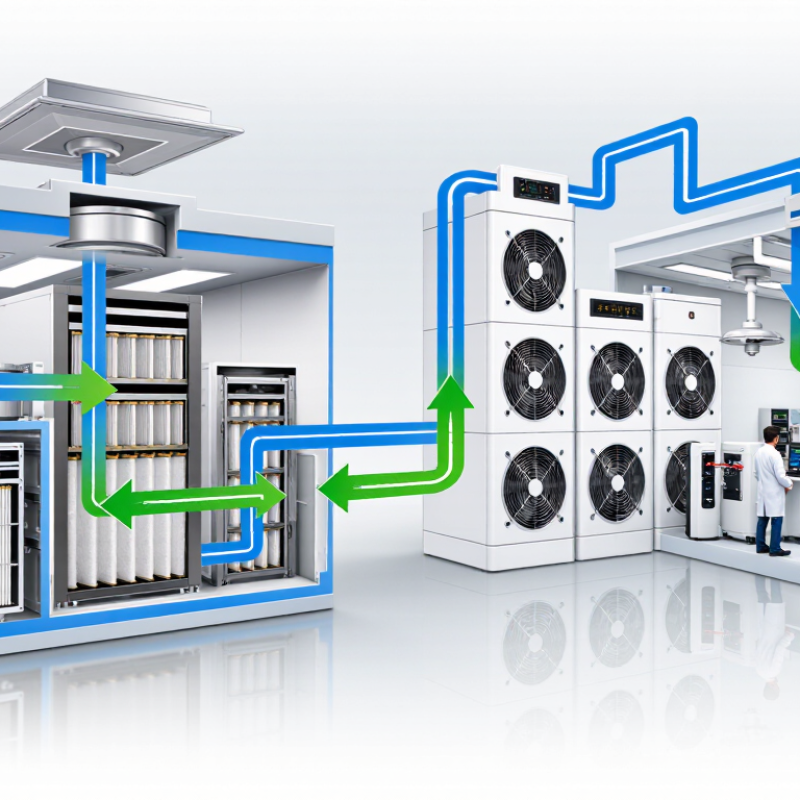
Ever wonder what goes into keeping the air clean in a hospital or lab? That’s exactly what the 2026 guide to top purification air handling unit manufacturers looks at. It profiles the companies behind these systems, and honestly, they’re the unsung heroes of safer, more energy-conscious indoor spaces—from pharma facilities to electronics plants and other controlled commercial environments. These units aren’t simple. They’ve got to manage airflow, temperature, humidity, filtration, and pressure, all with consistent accuracy. No pressure, right?

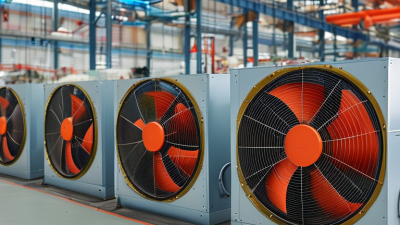
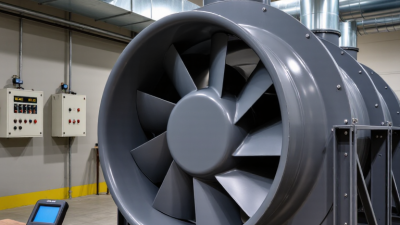
We looked at a bunch of manufacturers—Daikin, Johnson Controls, Systemair, FläktGroup, TROX, Munters, and Airsys, to name a few. Their systems often come with things like HEPA filters, heat recovery, variable-speed drives, smart monitoring, and tightly sealed air paths, so they’re pretty well equipped. And of course, the Air Conditioning Fans themselves matter too—if the airflow isn't stable, filtration can take a hit and you end up with some pretty uncomfortable pressure changes. So when you're really evaluating a unit, it's worth looking beyond the basics: fan efficiency, filter access, noise levels, corrosion resistance, control integration, and honestly, after-sales support can make or break the experience.

Honestly, real projects tell you a lot more than any brochure ever will. For instance, a surgical unit might need steady pressure and minimal turbulence, but a lab? There, contamination control and quick alarm response are what really matter. And you can't ignore energy use—especially if the systems are running around the clock. No rating or ranking is ever perfect, either. In the end, the best pick comes down to things like local service quality, how the project is designed, maintenance know-how, and the specific operating conditions. You know, those published specs can look really impressive on paper, but a lot of them haven't actually been verified by anyone outside the company. That's a pretty significant flaw, and I think it's something we need to be honest about.

So, if you're looking at Purification Air Handling Unit manufacturers in 2026, this guide gives you a solid way to compare them. It's not just about flashy specs—we care about what's actually documented, how the units perform in the field, how open engineers are, and whether support won't leave you hanging. Before you commit, do yourself a favor: double-check certifications, dig into test reports, think about lifecycle costs, and make sure everything lines up with local requirements. At the end of the day, real-world proof beats marketing every time.
2026 Top Purification Air Handling Unit Manufacturers

Purification Air Handling Units: Definition and Core Functions

A purification air handling unit is an engineered system that cleans, conditions, and distributes air in controlled environments. It combines fans, filters, cooling or heating coils, dampers, sensors, and control software in one housing. Unlike a standard air handler, it is designed to limit airborne particles and maintain stable room conditions.

Its core function begins with staged filtration. A prefilter captures larger dust, while finer filters remove smaller particles before air reaches the occupied space. In sensitive areas, HEPA filtration may support high particle-control performance when correctly selected and sealed. The unit also regulates temperature and humidity. Stable conditions protect equipment, materials, and worker comfort. Pressure control matters too. A slight positive pressure can reduce unfiltered air entry, while negative pressure can help contain unwanted contaminants.

In practical projects, correct airflow measurement is as important as filter efficiency. Technicians check pressure drops, leakage, fan output, and sensor accuracy during commissioning. Small installation gaps can undermine expensive filters. No unit is perfect. Filters load over time, and energy use rises as resistance increases. I have found that maintenance teams sometimes focus on replacement dates and overlook abnormal pressure readings. That habit needs review. Reliable performance depends on documented testing, balanced airflow, accessible components, and a control strategy that staff can understand. Fresh-air requirements, room classification, and local safety rules should shape the final configuration.

2026 Top Purification Air Handling Unit Manufacturers

Purification Air Handling Units: Definition and Core Functions

Purification air handling units condition, filter, and distribute air for controlled environments. This chart shows the maximum permitted concentration of airborne particles sized at 0.5 μm or larger for selected ISO cleanroom classifications. Lower particle concentrations indicate stricter purification requirements. The values are based on ISO 14644-1 classification limits; actual system performance depends on airflow design, filtration stages, sealing, maintenance, and room operation.

How the Top 2026 Manufacturers Are Evaluated

Evaluators of 2026 purification air handling unit manufacturers look beyond catalog claims. They examine airflow stability, filtration efficiency, noise levels, and energy use under realistic conditions. Site experience matters. Technicians review installation records, maintenance logs, and sensor readings from operating facilities. Real evidence counts.

Testing should reflect changing loads, humidity, pressure, and filter resistance. A unit that performs well in a clean laboratory may struggle beside a busy production line.

Independent laboratory reports, traceable calibration records, and recognized safety certifications strengthen technical credibility. However, one test cannot represent every building or climate.

Evaluators also inspect design details, including access doors, drain pans, seals, controls, and filter replacement space. Small weaknesses often create larger maintenance problems. They compare warranty terms, spare-part availability, training, and response times. Transparent documentation earns trust, especially when performance limits are clearly stated. No scorecard is perfect. Reviewers should question missing data, inconsistent measurements, and unusually attractive efficiency figures. A practical trial can reveal vibration, awkward service access, or unstable control signals that paperwork misses. Manufacturers willing to discuss failures may offer more reliable evidence than those presenting only polished results.

Leading Purification Air Handling Unit Manufacturers in 2026

Leading purification air handling unit manufacturers in 2026 are judged by more than catalog capacity. Experienced teams examine airflow stability, filtration stages, leakage control, and service access before approving a design. A cleanroom unit may look impressive on paper, yet poor door seals can raise particle counts within minutes. Field engineers now request factory test records, sensor calibration data, and documented performance at changing loads. Evidence matters.

Reliable manufacturers build units around the building, not around a standard shell. They calculate outdoor air demand, humidity swings, heat recovery, and pressure relationships together. Some projects pair purified air systems with an Air Cooled Cooling Tower, creating a practical cooling arrangement for large facilities. This pairing still requires careful water, coil, and control coordination. One overlooked valve can disturb temperature control. Small details matter.

Leading suppliers also support commissioning after delivery. Technicians should verify filter seating, fan vibration, noise, airflow volume, and alarm response on site. Digital monitoring helps, but it cannot replace physical inspection. Field reviews often reveal efficiency losses caused by difficult access panels. That lesson deserves attention. Manufacturers should publish maintenance intervals, spare-part expectations, and limits for real operating conditions. Marketing language is not enough. A transparent supplier admits where its design needs adjustment, especially when occupancy, process heat, or local climate changes.

Key Technologies Used in Modern Purification AHUs

Modern purification air handling units rely on layered protection, not one impressive filter. A washable prefilter captures larger dust and protects downstream components. Fine filters then reduce smaller particles before air reaches HEPA or ULPA filters. Correct sealing matters as much as filter grade. Small leaks can undermine expensive filtration.

Airflow control has become more intelligent. EC fans and variable-speed drives adjust volume according to room pressure and occupancy. Differential pressure sensors reveal clogged filters early. Temperature, humidity, and particle sensors support continuous verification. UV-C treatment may assist coil hygiene, but it cannot replace proper cleaning. Heat recovery wheels can reduce energy demand, although cross-contamination risks require careful selection and maintenance. Evaporative Air Cooling Tower systems may support cooling in suitable climates, but humidity control must remain precise.

In field operation, stable pressure is often harder than expected. Door openings, aging seals, and incorrect sensor placement create uneven airflow. No system is perfect. Digital monitoring can also produce false confidence when sensors are poorly calibrated. A reliable AHU needs documented testing, accessible service panels, and scheduled filter inspections. Engineers should review real operating data instead of trusting design assumptions. That practical feedback often exposes weaknesses early, especially during seasonal changes or sudden occupancy increases.

Industry Applications and Performance Requirements

Purification air handling units in 2026 must match the risks of each application. Pharmaceutical rooms often require HEPA filtration, stable humidity, and positive pressure control. Air changes may exceed 20 per hour in critical zones. Small leaks matter.

Electronics manufacturing needs extremely low particle levels and reliable temperature control. Hospitals prioritize clean air, quiet operation, and safe pressure relationships between rooms. Food processing areas demand washable surfaces, corrosion resistance, and controlled moisture. Cooling Tower Air Conditioning can support large facilities, but the connection needs careful water, airflow, and contamination control. A poorly designed interface can reduce efficiency.

Performance should be verified under real operating conditions, not only during factory testing. Technicians should measure filter resistance, airflow, temperature, humidity, noise, and room pressure. No design is perfect. Field conditions change.

Energy use also deserves attention. Variable-speed fans, heat recovery, and demand-based ventilation can reduce consumption without weakening purification. However, lower airflow is not always better. A unit may save power while failing to protect a sensitive process. Service access is equally important; cramped filter sections encourage delayed maintenance. Filters need documented replacement intervals, while sensors require regular calibration. These details appear ordinary, but they often decide whether an air system performs reliably after years of operation.

2026 Top Purification Air Handling Unit Manufacturers - Industry Applications and Performance Requirements

Industry Application Typical Cleanliness Target Recommended Filtration Arrangement Typical Air-Change or Airflow Requirement Temperature and Humidity Control Pressure Relationship Key AHU Performance Requirements Common Reference Standards
Pharmaceutical Sterile Manufacturing ISO Class 5 at critical zones; ISO Class 7 or 8 in supporting areas Pre-filter, fine filter, and terminal HEPA H13 or H14; redundant fan and filter monitoring commonly specified Approximately 20–60 air changes per hour in classified rooms, subject to process and airflow study Typically 18–24 °C; relative humidity commonly 30–60%, with tighter limits where product stability requires Positive pressure cascade, commonly about 5–15 Pa between adjacent cleanliness zones Low leakage casing, stable airflow, HEPA integrity testing, validated recovery time, low vibration, and continuous differential-pressure monitoring ISO 14644-1, ISO 14644-3, EU GMP Annex 1, EN 1822, EN 1886
Biotechnology and Cell-Gene Therapy ISO Class 5–8, depending on open processing, closed processing, and biosafety zoning Pre-filtration plus HEPA H13/H14; exhaust filtration may require HEPA or specialized containment systems Approximately 15–40 air changes per hour for classified spaces; airflow must support containment and recovery objectives Typically 18–25 °C; humidity often controlled between 30–60% RH unless process conditions dictate otherwise Positive pressure for product protection or negative pressure for biosafety containment; pressure setpoints are risk-assessment based Airflow segregation, fail-safe controls, decontamination compatibility, tight casing, alarm logging, and high-efficiency exhaust capability ISO 14644 series, EN 1822, EN 1886, applicable GMP and biosafety guidance
Medical Device Manufacturing Typically ISO Class 7 or 8; tighter zones may require ISO Class 5 at the point of assembly ISO ePM10/ePM2.5 pre-filtration followed by ePM1 and terminal HEPA where required Approximately 10–30 air changes per hour, determined by contamination-control and heat-load calculations Commonly 20–24 °C and 40–60% RH, with electrostatic and material-handling requirements considered Usually positive pressure relative to less-clean adjacent spaces Consistent air distribution, low particle generation, filter-change access, corrosion resistance, and documented commissioning data ISO 14644-1, ISO 14644-3, ISO 16890, EN 1822, EN 1886
Semiconductor and Electronics Manufacturing ISO Class 3–6 for critical process areas; local mini-environments may be cleaner High-capacity pre-filters, fine filters, and terminal HEPA or ULPA; chemical filtration may be added for molecular contamination Approximately 30–600 air changes per hour in highly controlled areas, depending on room type and recirculation design Often 20–24 °C with tightly controlled humidity, commonly 35–50% RH; process tools may impose narrower limits Positive pressure cascade and carefully controlled turbulence to limit particle transport Very low particle shedding, uniformity, high recirculation efficiency, low vibration, low noise, precise fan-speed control, and optional chemical contamination control ISO 14644-1, ISO 14644-3, EN 1822, EN 1886, ISO 16890
Hospital Operating Rooms Typically ISO Class 7 or equivalent national healthcare classification for conventional operating rooms Pre-filter and fine filter, with terminal HEPA commonly used for critical surgical environments Often 15–25 air changes per hour, including required outdoor-air and recirculated-air components Commonly 20–24 °C and 30–60% RH, subject to healthcare regulations and clinical preference Positive pressure relative to corridors and surrounding areas, unless infection-control strategy requires otherwise High outdoor-air capability, reliable redundancy, low noise, accessible maintenance, antimicrobial-risk control, and documented airflow balance ASHRAE 170, ISO 14644 where applicable, EN 1822, EN 1886, local healthcare codes
Hospital Isolation and Infectious Disease Rooms Contamination control based on room function; particle classification is secondary to directional airflow and exhaust safety Pre-filter and fine filter on supply; HEPA filtration on exhaust or portable recirculating units where risk assessment requires it Commonly 12 or more air changes per hour for airborne infection isolation rooms, subject to applicable code Typically 20–24 °C and 30–60% RH, with occupant comfort and infection-control requirements balanced Negative pressure relative to adjacent spaces; commonly maintained near −2.5 Pa or greater where specified by healthcare guidance Exhaust reliability, pressure stability, visual alarms, safe filter servicing, emergency power support, and prevention of air recirculation to clean areas ASHRAE 170, CDC healthcare guidance, EN 1822, EN 1886, local infection-control codes
Food and Beverage Processing Hygienic zoning based on product exposure, process risk, and allergen-control requirements Washable pre-filters, fine filtration, and HEPA filtration in high-care or aseptic areas where required Typically 10–30 air changes per hour in high-care areas; airflow is adjusted for heat, moisture, and hygiene zoning Commonly 10–25 °C and 40–70% RH, with lower humidity used for powder and moisture-sensitive products Positive pressure from cleaner to less-clean zones; pressure must not spread allergens or condensation risks Hygienic construction, sloped drainable surfaces, corrosion resistance, cleanability, moisture management, and prevention of condensation EN 1672-2, ISO 16890, EN 1886, applicable HACCP and hygienic-design requirements
Laboratories and Research Facilities Cleanliness and containment level determined by laboratory activity, sample sensitivity, and biosafety classification Pre-filter and fine filter on supply; HEPA filtration for clean laboratories, biological containment, or specialized exhaust systems Approximately 6–20 air changes per hour, with higher rates for containment, odor, or chemical dilution requirements Typically 18–24 °C and 30–60% RH, with tighter stability for sensitive experiments Negative pressure for hazardous or infectious work; neutral or positive pressure for non-hazardous clean research 100% outdoor-air capability where required, exhaust redundancy, fume-control compatibility, stable pressure control, and safe maintenance access ASHRAE 62.1, ASHRAE 170 where applicable, EN 1822, EN 1886, local laboratory safety standards
Museums, Archives, and Libraries Low particulate and pollutant exposure; preservation stability is more important than high air-change rates Fine particulate filtration, typically ISO ePM1 or better; activated-carbon or molecular filtration for gaseous pollutants where needed Often about 2–6 air changes per hour, selected to limit drafts and preserve energy while maintaining uniformity Commonly 18–22 °C with stable RH around 40–55%; allowable variation depends on collection materials Usually neutral or slightly positive pressure to reduce infiltration of outdoor pollutants Excellent temperature and humidity stability, low air velocity, low noise, energy-efficient fan control, and pollutant monitoring ASHRAE environmental guidance, ISO 16890, EN 1886, conservation-specific facility standards
Data Centers and Critical IT Rooms Low particulate concentration and high thermal-control reliability; ISO cleanroom classification is not normally required Low-pressure-drop pre-filters and fine filters selected for equipment protection and long service life Airflow is primarily calculated from IT heat load; high recirculation volumes and containment layouts are common ASHRAE recommended operating range is commonly 18–27 °C at equipment inlet, with humidity controlled to avoid condensation and electrostatic risk Pressure is generally neutral or slightly positive relative to surrounding spaces High sensible cooling ratio, N+1 or greater redundancy, continuous monitoring, low filter pressure drop, free-cooling compatibility, and rapid fault response ASHRAE TC 9.9, ISO 16890, EN 1886, applicable data-center availability standards
Technical note: Values shown are typical design ranges for preliminary comparison rather than universal acceptance criteria. Final AHU selection should be based on the validated airflow study, local codes, process heat and moisture loads, filtration test data, pressure-loss calculations, commissioning results, and required redundancy level.

How to Select the Right Purification AHU Manufacturer

2026 Top Purification Air Handling Unit Manufacturers
How to Select the Right Purification AHU Manufacturer

Choosing a purification AHU manufacturer requires more than comparing purchase prices. Start with the intended room classification, airflow pattern, temperature range, and humidity limits. A capable supplier should explain filter stages, fan selection, casing insulation, condensate control, and pressure relationships in clear technical language.

Ask for factory test records, airflow measurements, leakage results, and filter integrity procedures. Confirm whether the manufacturer can support site commissioning and periodic performance checks. Experienced teams usually provide drawings, material certificates, maintenance schedules, and spare-parts guidance before contract approval. Review their production facility if possible. Clean assembly areas and traceable inspection records reveal more than polished brochures.

Watch the details.

The supplier should understand your building conditions, not copy a standard layout. For example, coastal air may require stronger corrosion protection, while dusty sites need practical prefilter access. Do not confuse an AHU requirement with an Air Inlet Louvers Cooling Tower specification; both manage air, but their hygiene and control objectives differ. I would also question impressive efficiency claims without test conditions, fan speed, or filter loading data. No specification is perfect. A useful manufacturer admits design limits and proposes verification steps. Select the team that documents assumptions, responds precisely, and remains available after installation.

FAQS

How are purification air handling unit manufacturers evaluated?

Evaluators examine airflow stability, filtration efficiency, noise, energy use, and field performance. Real records matter.

Why should testing include changing operating conditions?

Loads, humidity, pressure, and filter resistance constantly change. A clean laboratory may not represent a busy facility.

What filtration structure is commonly used?

A washable prefilter captures large dust. Fine filters reduce smaller particles before HEPA or ULPA filtration.

Why is filter sealing important?

Even high-grade filters can fail when seals leak. Small gaps may weaken the entire purification system.

How do sensors and variable-speed fans improve operation?

Fans adjust airflow for pressure and occupancy changes. Sensors track particles, humidity, temperature, and filter resistance.

Can digital monitoring guarantee reliable performance?

No. Poor calibration or incorrect sensor placement can create false confidence. The readings may look precise.

What do different industries require from purification air systems?

Pharmaceutical areas need stable humidity and pressure. Electronics spaces need very low particle levels. Hospitals also need quiet operation.

How can energy use be reduced without weakening purification?

Variable-speed fans, heat recovery, and demand-based ventilation can lower consumption. Lower airflow is not always safer.

What maintenance details should buyers inspect?

They should check service panels, drain pans, seals, filter space, spare parts, and calibration schedules. Awkward access causes delays.

What evidence should evaluators question?

They should question missing data, inconsistent measurements, and unusually high efficiency claims. Practical trials may reveal vibration or unstable controls.

Conclusion

This article provides a practical overview of the 2026 purification air handling unit market, beginning with the definition and core functions of a Purification Air Handling Unit. It explains how these systems manage airflow, temperature, humidity, filtration, and contamination control in demanding indoor environments. The article also outlines the main criteria used to evaluate leading manufacturers, including engineering capability, product reliability, energy efficiency, customization, testing standards, after-sales support, and long-term operating value.

It further examines key technologies such as multi-stage filtration, HEPA filtration, air pressure control, intelligent monitoring, heat recovery, and automated sanitation management. Applications across healthcare, pharmaceutical production, laboratories, electronics manufacturing, food processing, and other controlled environments are discussed alongside their specific performance requirements. Finally, the article offers guidance on selecting a suitable manufacturer by comparing system design, compliance documentation, service capacity, maintenance needs, delivery capability, and total lifecycle cost.
Samantha

Samantha

Samantha is a dedicated marketing professional with a profound expertise in the HVAC industry. With an impressive depth of knowledge about the company’s extensive product range, which includes various models of fans, fire smoke exhaust fans, and ventilation solutions, she plays a vital role in......
Previous How to Choose Constant Temperature and Humidity AHU in 2026?