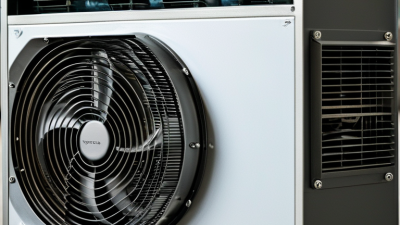
Picking the top 10 centrifugal fans for buyers around the globe in 2026 isn't just about eyeballing the sticker prices or comparing specs on a catalog. Looks can be deceiving—something that seems efficient on paper might not cut it once it's actually installed. You really need to think about airflow, static pressure, motor control features, noise levels, how easy it is to do maintenance, and whether the operating conditions match what your project needs.
As Dr. Jelena Srebric, a respected fellow of ASHRAE and expert in building systems, once pointed out, “Good HVAC design starts with understanding how air actually moves.” That’s what really guides this review. We look at each fan model through practical questions like: Can it keep a steady airflow? Does the motor support variable speed if needed? Is the housing built to handle humid or dusty environments? And are replacement parts easy to find in your region?
Honestly, little things matter—like a badly sealed access panel that wastes energy or excessive vibration that might loosen bolts over time. And just because a fan performs quietly in a controlled showroom doesn’t mean it’ll stay that way when you’ve got a busy factory, kitchen, or data center running around it. It’s important to rely on certified performance data rather than just attractive marketing claims.
This guide compares different manufacturers and models, whether for commercial HVAC, industrial ventilation, or processes that require specialized air movement. It also takes into account the rising trend of centrifugal fans in HVAC systems that feature smart monitoring and are more energy-efficient. Keep in mind, some rankings are naturally up for debate—that’s intentional. After all, your ideal fan choice depends heavily on your specific duty needs, local climate, how well it’s installed, and support available nearby.
Remember, the most powerful fan isn’t always the best pick. Usually, it’s about finding that one reliable fan that moves air effectively without causing a bunch of new headaches.
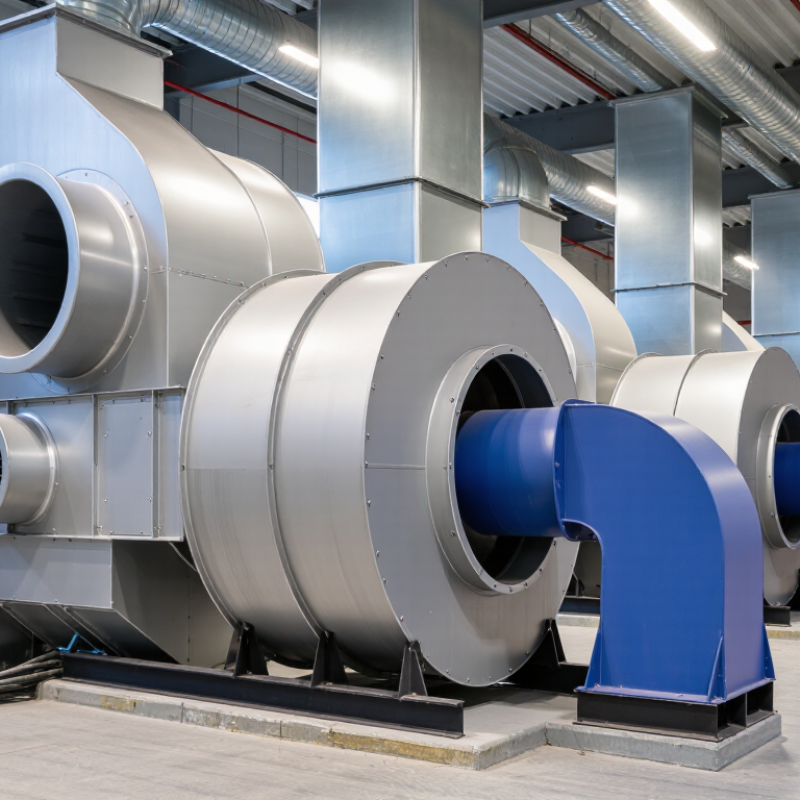
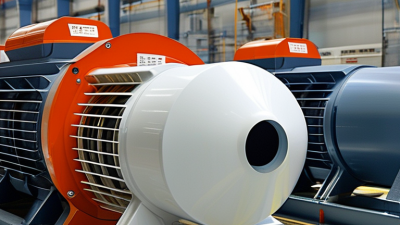
A centrifugal fan moves air by converting rotating energy into airflow and pressure. Its impeller spins inside a housing, drawing air through the central inlet. The blades then push air outward by centrifugal force. The housing collects this air and guides it toward the discharge outlet. This curved passage gradually changes velocity into useful static pressure.
A Cabinet Centrifugal Fan places these components inside a protective enclosure. The cabinet can reduce contact risks, simplify installation, and support duct connections. Air enters axially and leaves radially. That change in direction is the key.
In practical installations, technicians check airflow, static pressure, temperature, noise, and operating hours. A fan delivering high airflow may still perform poorly against restrictive filters or long ducts. Impeller diameter, blade shape, motor speed, and system resistance all affect performance. Variable-speed control can reduce energy use when demand changes. However, incorrect speed settings may increase vibration, noise, or motor load.
Selection charts should be read with measured system conditions, not guesses. I have found that clean calculations still need field verification. Real ducts contain bends, leaks, dust, and uneven transitions. Small details matter. Buyers should request certified performance data, motor protection information, maintenance access, and test conditions. Efficiency ratings help, but they do not replace a complete system assessment. A quiet fan in a showroom may sound different beside a metal duct. That detail is easy to overlook.
When comparing centrifugal fans in 2026, start with the duty point, not the catalog’s maximum airflow. Air volume and static pressure must match the actual duct system. A fan rated for 20,000 cubic meters per hour may perform poorly after filters, bends, dampers, and heat exchangers are installed. Request a certified performance curve and check whether it reflects clean or system conditions.
Efficiency deserves close attention. Examine total fan efficiency, motor efficiency, speed control, and expected operating hours. A variable-frequency drive can reduce energy use, but only when the fan and motor support stable control. Noise also matters. Compare sound pressure levels at defined distances and frequencies, rather than trusting a single decibel number. Small differences become obvious in workshops and occupied buildings.
Materials should match the air. Galvanized steel may suit ordinary ventilation, while coated or stainless construction can better resist moisture and selected chemical exposure. Ask about bearings, access panels, balancing quality, and replacement parts. Maintenance access is easy to ignore.
Until service begins.
I would not overtrust a perfect spreadsheet. Real installations often reveal vibration, unexpected resistance, or unstable airflow. Independent testing, clear tolerances, and documented factory inspection improve confidence. Global buyers should also verify voltage, frequency, certification requirements, delivery conditions, and technical support before purchase. A lower initial price can become expensive when commissioning takes weeks.
The top ten centrifugal fans for global buyers should be judged by airflow, pressure, efficiency, and service access. A fan with a strong motor is not automatically the best choice. I examine the duty point first: required air volume, static pressure, temperature, and operating hours. Backward-curved impellers often deliver efficient performance in ventilation and industrial air systems. Forward-curved designs can suit compact, lower-pressure equipment. Radial-blade fans handle dusty air more confidently, but they may produce more noise.
For international projects, voltage flexibility and motor standards matter greatly. Confirm frequency, insulation class, ingress protection, and available replacement parts before ordering. A galvanized steel housing can resist humid conditions, while stainless steel may be better near corrosive air. Check the inlet and outlet dimensions carefully. A small mismatch can create vibration, leakage, and unexpected installation costs. Sound pressure should be measured at a stated distance, not hidden behind vague “quiet” claims.
The ranking also considers balancing quality, bearing life, control compatibility, and documentation. Variable-speed control can reduce energy use when demand changes, although poor settings may cause unstable airflow. Axial Hvac Fans remain useful for high-volume, low-pressure movement, but they are not a direct substitute for every centrifugal application. I would not pretend that one top-ten list fits every market. Local climate, maintenance skills, import standards, and available power can change the result. Field testing is still valuable. A carefully selected mid-range fan may outperform an expensive unit installed with weak ductwork.
Centrifugal fans serve different duties across factories, buildings, farms, and transport facilities. A reliable choice begins with the application, not the catalog label. Metalworking shops often need spark-resistant construction and steady airflow for fume extraction. Food-processing rooms demand washable surfaces, corrosion control, and careful hygiene planning. Dust changes everything.
In commercial buildings, backward-curved fans can support efficient ventilation with stable pressure. High-rise systems need quiet operation, compact dimensions, and controls that respond to changing occupancy. Warehouses usually prioritize large air volume and simple maintenance access. Poultry houses require strong circulation, yet excessive speed can stress animals and waste energy. Mining and cement areas may require reinforced housings, sealed bearings, and planned filter replacement. Pressure loss through ducts is often underestimated.
Buyers should compare airflow, static pressure, temperature range, noise, motor efficiency, and service conditions. Ask for performance curves at the actual operating point. A fan rated only by maximum air volume may disappoint after installation. Field experience shows that dampers can remain closed while ducts stay undersized. That mistake is avoidable. Still, every site behaves differently. Seasonal heat, dust loading, voltage stability, and cleaning routines can shift results. Independent testing records, clear documentation, and accessible spare parts improve purchasing confidence for global projects.
Choosing from the 10 best centrifugal fans for global buyers in 2026 requires more than comparing airflow figures. Energy efficiency begins with matching the fan to its actual duty point. Oversized equipment may consume unnecessary power, especially during partial-load operation. Variable-speed control can reduce this waste.
Measure airflow, static pressure, motor input, and operating hours. A small pressure error can increase annual electricity use significantly. In practical inspections, dirty filters and sharp duct bends often reduce performance. Catalog efficiency alone cannot reveal those losses. Commissioning matters.
Noise levels deserve equal attention. A fan beside an office, hospital, or workshop can create constant low-frequency discomfort. Ask for sound data at the expected distance, not only laboratory figures. Listen for vibration after installation. Quiet operation is valuable.
For Cooling Tower Fans, environmental performance includes energy use, service life, and maintenance materials. Efficient motors can lower emissions over years of operation. Durable housings may reduce replacement waste. Recyclable metal components are useful, but only when local recycling systems accept them.
Some decisions remain imperfect. A quieter fan may cost more or require a larger installation space. I would recheck the calculation before purchasing. Real conditions change. Humidity, dust, seasonal demand, and neglected maintenance can defeat a well-designed selection. Reliable buyers should request test records, service guidance, and transparent performance limits.
Selecting among the 10 best centrifugal fans for global buyers in 2026 requires more than comparing airflow and purchase price. Installation quality strongly affects operating cost. The U.S. Department of Energy reports that optimized fan systems can reduce energy use by 20% to 50% in suitable applications. Correct sizing matters. An oversized fan may run quietly, yet waste electricity through throttling.
Install the fan on a rigid, level base with adequate service clearance. Keep duct transitions smooth and avoid sharp elbows near the inlet. Poor airflow can increase turbulence, vibration, and bearing stress.
A variable-speed drive can match output to demand, but only after confirming motor compatibility and minimum safe speed. Local voltage, weather, dust, and access conditions also deserve attention.
Maintenance should include monthly filter checks, quarterly belt inspection, and scheduled vibration measurements. Even a small misalignment can create visible belt dust near the pulley.
The IEA’s Energy Efficiency 2023 report states that motor-driven systems consume roughly half of global electricity, making efficiency losses financially significant. DOE fan-system guidance also shows that energy can dominate lifetime costs.
Still, projected savings are not guaranteed. Real buildings change, filters clog, and operators sometimes bypass controls. A practical cost model should include electricity, spare parts, downtime, cleaning labor, and eventual motor replacement. Performance records are useful, but they are rarely perfect.
10 Best Centrifugal Fans for Global Buyers in 2026
How to Choose the Right Centrifugal Fan for Your Market
Choosing among the 10 best centrifugal fans starts with the application, not the catalog ranking. Measure required airflow, static pressure, operating hours, and air temperature. A kitchen exhaust system may need corrosion resistance, while a factory line may demand stable pressure under dust loads. Hvac Fans And Blowers should match the duct layout, filter resistance, and available installation space.
Check voltage, frequency, motor efficiency, noise limits, and local certification requirements before comparing prices. A fan rated for 60 Hz may perform differently on a 50 Hz supply. Ask for performance curves, sound data, material specifications, and factory test records. These documents reveal more than a polished product photograph. Confirm whether the impeller is backward-curved, forward-curved, or radial. Each design serves a different pressure and efficiency range.
Field conditions often expose weak assumptions. I have seen airflow fall after a filter became partially blocked. That detail matters. Consider cleaning access, bearing life, spare parts, and technician support in your market. An imported fan may look efficient, yet delayed parts can stop production. Some buyers also overlook humidity and salt exposure near coastal sites. I would recheck every selection with a real duty point, because the first estimate is rarely perfect. Safety guards and installation instructions should be clear, practical, and suitable for local workers.
| Rank | Fan Configuration | Typical Airflow Range | Typical Static Pressure | Typical Total Efficiency | Common Drive Options | Best-Fit Applications | Key Advantages | Important Selection Considerations |
|---|---|---|---|---|---|---|---|---|
| 1 | Airfoil Backward-Curved Fan | 5,000–250,000 m³/h | 800–3,000 Pa | 75–88% | Direct drive or belt drive; variable-frequency control | HVACAir-handling unitsCommercial buildings | High efficiency, stable operation, and relatively low sound levels in clean-air service. | Requires adequate inlet and outlet duct conditions; not the first choice for heavy dust or fibrous material. |
| 2 | Backward-Inclined Fan | 2,000–150,000 m³/h | 500–2,500 Pa | 70–85% | Direct drive or belt drive | Factory ventilationProcess airRetail HVAC | Non-overloading power characteristic and good efficiency across a broad operating range. | Check the operating point carefully to avoid unstable regions at very low airflow. |
| 3 | Forward-Curved Fan | 500–50,000 m³/h | 250–1,000 Pa | 45–70% | Direct drive; multi-speed motor or electronic control | Fan-coil unitsSmall air handlersAppliance ventilation | Compact design, high airflow at low pressure, and economical manufacture. | Motor power can rise sharply with excessive system airflow; use overload protection and correct balancing. |
| 4 | Radial-Blade Industrial Fan | 1,000–80,000 m³/h | 1,000–5,000 Pa | 55–75% | Belt drive or direct drive | Dust collectionMaterial handlingProcess exhaust | Robust wheel design and good tolerance of particulate-laden or mildly abrasive air. | Blade wear, dust loading, material compatibility, and cleanout access must be evaluated. |
| 5 | High-Pressure Radial Fan | 500–30,000 m³/h | 3,000–10,000 Pa | 50–72% | Belt drive; direct drive for compact units | Pneumatic conveyingCombustion airHigh-resistance ductwork | Generates high pressure for long ducts, filters, nozzles, and conveying systems. | Usually has higher noise and energy consumption; verify temperature, wear, and motor service factor. |
| 6 | Plug Fan | 5,000–200,000 m³/h | 500–2,500 Pa | 70–86% | Direct-drive motor, commonly with variable-frequency drive | Air-handling unitsData centersModular HVAC | Compact, efficient, and easy to integrate into custom air-handling casings. | Performance depends strongly on casing geometry, inlet clearance, and discharge arrangement. |
| 7 | Inline Centrifugal Fan | 500–25,000 m³/h | 200–1,500 Pa | 55–75% | Direct drive; speed controller or variable-frequency drive | Commercial exhaustKitchen ventilationSmall industrial systems | Space-saving installation directly within a round or rectangular duct system. | Confirm service access, duct diameter, condensate management, and acoustic treatment. |
| 8 | Centrifugal Roof Exhaust Fan | 1,000–40,000 m³/h | 100–800 Pa | 45–70% | Direct drive or belt drive | Building exhaustWarehouse ventilationSmoke-free general exhaust | Discharges air above the roof and reduces the risk of re-entrainment near wall openings. | Check weather protection, roof curb dimensions, wind exposure, corrosion resistance, and maintenance access. |
| 9 | High-Temperature Centrifugal Fan | 1,000–100,000 m³/h | 500–4,000 Pa | 50–78% | Belt drive with shaft cooling; special motor arrangements may be required | OvensKilnsDrying systemsFume exhaust | Designed for elevated air temperatures with suitable bearings, seals, materials, and cooling arrangements. | Specify continuous and peak temperature, gas composition, insulation, expansion allowance, and bearing temperature limits. |
| 10 | Spark-Resistant Process Fan | 1,000–60,000 m³/h | 500–3,000 Pa | 50–75% | Belt drive or direct drive, subject to hazardous-area requirements | Flammable vapor exhaustChemical processingDust-risk areas | Can be configured with suitable construction materials, grounding, and electrical protection for hazardous environments. | Define the hazardous-area classification, gas or dust group, temperature class, corrosion exposure, and required certification before purchase. |
Start with the real duty point, including airflow, static pressure, temperature, and operating hours. Measure the actual system. Filters, bends, dampers, and heat exchangers can sharply increase resistance.
Maximum airflow usually reflects ideal conditions without connected ductwork or filters. A fan rated for high airflow may perform poorly after installation. Request a certified performance curve for system conditions.
Backward-curved impellers often provide efficient ventilation and industrial performance. Forward-curved designs can suit compact, lower-pressure equipment. Radial-blade fans handle dusty air, although they may produce more noise.
Review total fan efficiency, motor efficiency, speed control, and expected operating hours. Variable-speed control can reduce energy use when demand changes. Poor settings may create unstable airflow.
Compare sound pressure levels at stated distances and across relevant frequencies. Do not trust one vague decibel number. Small differences become obvious in workshops and occupied buildings.
Galvanized steel can suit ordinary ventilation and humid environments. Coated or stainless construction may better resist moisture and selected chemical exposure. Coastal air needs extra attention.
Confirm voltage, frequency, insulation class, ingress protection, and local certification requirements. A fan designed for 60 Hz may perform differently on a 50 Hz supply. Check replacement parts before ordering.
Verify inlet and outlet dimensions, balancing quality, bearing life, access panels, and cleaning space. A small mismatch can cause vibration, leakage, and added installation costs. Maintenance access is easy to ignore.
Yes, delayed parts, weak ductwork, and difficult commissioning can increase total costs. An imported fan may appear efficient but stop production during repairs. The spreadsheet may look perfect. Field testing and documented factory inspections provide better confidence.
This guide provides a practical overview of Centrifugal Fans for global buyers in 2026. It explains how these fans use rotating impellers to move air and gas through changes in pressure, then compares the key performance factors that influence selection, including airflow, static pressure, efficiency, speed, materials, reliability, and control options. A carefully structured top-ten comparison helps readers understand how different fan configurations suit commercial buildings, factories, ventilation systems, dust collection, agriculture, and other demanding applications.
The article also examines energy consumption, operating noise, emissions, and environmental considerations that affect long-term value. It outlines essential installation and maintenance practices, such as correct sizing, secure mounting, balanced operation, regular cleaning, and timely inspection of components. Finally, it offers a market-focused selection framework based on climate, regulations, available power, workload, service support, total ownership cost, and required performance, helping buyers choose a safe, efficient, and durable solution for their specific application.