Choosing the right fan for a fire safety system isn't just about comparing airflow numbers—there's a lot more to consider. Factors like how it handles heat, smoke density, pressure drops, installation space, and how long it can operate in an emergency all play a big role in performance. This guide takes a closer look at five top high-temperature fire smoke exhaust axial fans, blending practical insights with technical details. We focus on aspects like motor protection, the way the impeller is built, how durable the casing is, compatibility with control systems, and whether they've been tested and documented properly.
A high-temperature-rated fire smoke exhaust axial fan needs to keep pushing out smoke even when regular ventilation fans might give up. From real-world experience, we’ve learned that tiny details truly matter. For example, shaft alignment can influence vibrations, bearing protection impacts how long the fan lasts, and even damper placement affects the actual airflow. We also explore the Fire Smoke Exhaust Fan With High Temperature Resistance category, looking at things like temperature ratings, emergency run times, access for maintenance, and installation needs. Always double-check that the product specs match your project’s actual conditions.
Honestly, no fan is perfect. Some brands might throw around impressive temperature figures, but if they don’t explain how those tests were done or what the airflow pressure really is, it’s worth taking a second look. That’s why we prefer to highlight specs that are clear and backed by traceable testing, along with practical maintenance advice and support from reputable engineering teams. These models can work well in industrial buildings, tunnels, warehouses, kitchens, and similar smoke-control setups, but keep in mind that your specific site conditions could influence your final choice. It’s always a smart move to have qualified professionals review system calculations, fire safety strategies, electrical setup, and local regulations before hitting the go button. Remember, even the most reliable fan can’t fix poor duct design or skipped maintenance. A holistic approach is key to safety and efficiency.
What Are High Temperature Fire Smoke Exhaust Axial Fans?
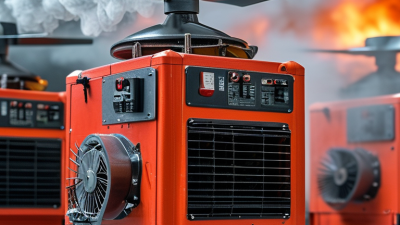
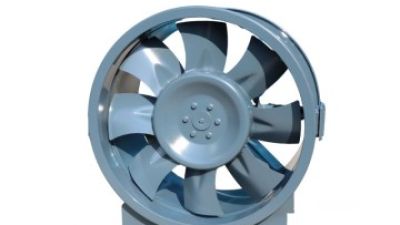
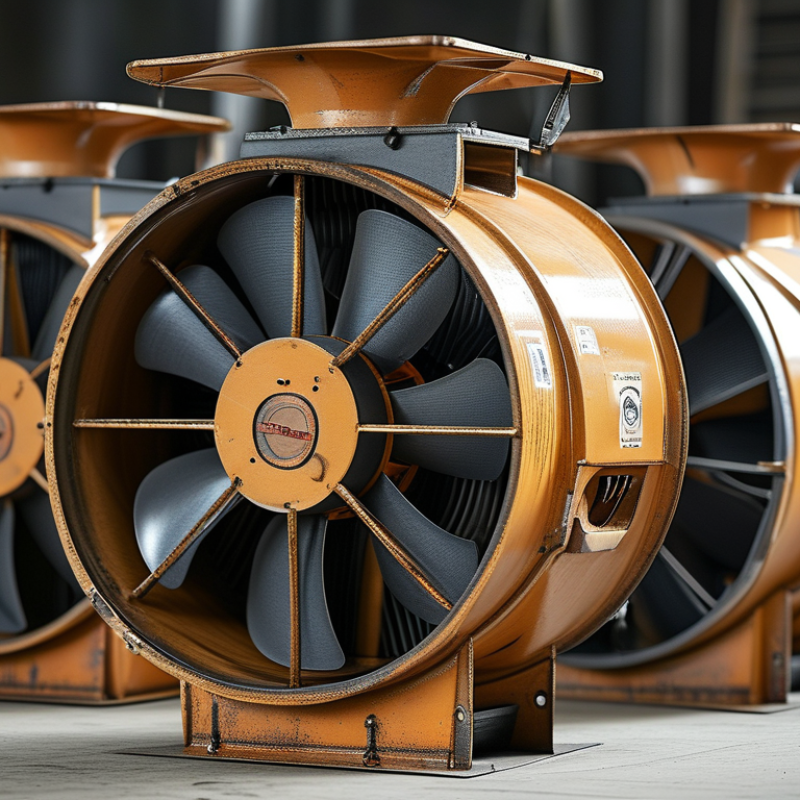
High temperature fire smoke exhaust axial fans are life-safety devices designed to remove hot smoke during a fire. Unlike ordinary ventilation fans, they must keep operating under extreme heat for a defined period. Their axial impeller moves large air volumes along the shaft, while a reinforced casing supports stable airflow. In many installations, the motor remains outside the hottest airstream. That detail matters.
European standard EN 12101-3 classifies smoke and heat exhaust fans by temperature and operating duration. Common ratings include F300 for 300°C exposure and F400 for 400°C exposure, often tested for 60 or 120 minutes. The correct
Fire Smoke Axial Flow Fan
depends on the building layout, smoke-control strategy, pressure losses, and required evacuation time. A high airflow number alone proves very little.
NFPA’s Fire Loss in the United States During 2023 report recorded about 1.39 million fires and over 3,000 civilian fire deaths. Smoke movement remains a critical design concern, not a cosmetic ventilation issue. During practical inspections, engineers should check bearings, belts, dampers, emergency power, and control signals. Small faults become serious under heat. Some specifications also overlook maintenance access, which deserves more attention. Testing should follow the applicable certification and project requirements, with performance verified after installation.
How Do High Temperature Axial Fans Work During Fires?
How Do High Temperature Axial Fans Work During Fires?
During a fire, a Fire Smoke Exhaust Fan helps remove hot gases from enclosed areas. Its axial impeller rotates like an aircraft propeller, moving a large air volume through a shaft or duct. The system usually starts after smoke detectors or manual controls send an alarm signal. Smoke dampers open, while other dampers close to guide the airflow.
High temperature axial fans are built for short, intense exposure. Heat-resistant motors, bearings, cables, and casings help the fan operate under tested fire conditions. Many systems use emergency power, so the fan can continue working when normal electricity fails. The exact operating temperature and duration depend on the tested assembly and local fire safety requirements. Qualified engineers must confirm those ratings before installation.
In practical commissioning, technicians measure airflow, inspect damper movement, and check vibration near the fan housing. They also test emergency power under realistic conditions. Small installation errors matter. A loose duct joint can leak smoke before it reaches the outlet. A blocked louver can reduce extraction and increase heat around escape routes. Real systems are not flawless, and maintenance findings should never be ignored. A powerful fan can still perform poorly when poor access, dust, or damaged seals are left uncorrected.
Key Performance Standards for Fire Smoke Exhaust Fans
5 Best High Temperature Fire Smoke Exhaust Axial Fans
Key Performance Standards for Fire Smoke Exhaust Fans
Fire smoke exhaust fans must move hot, contaminated air when escape routes become dangerous. Axial Hvac Fans are often selected for large airflow volumes and relatively low system resistance. However, airflow alone does not prove safe performance. Engineers should verify the rated temperature, operating duration, pressure capability, and tested installation arrangement.
Relevant standards may include EN 12101-3, NFPA guidance, or locally adopted fire safety requirements. The correct reference depends on the project location and authority having jurisdiction. A certified fan should show clear test data, including temperature exposure and continuous operating time. Check motor protection, impeller balance, casing strength, electrical supply, and smoke control interfaces. Small gaps matter.
Tips: Match the fan curve to the real duct resistance. Confirm airflow at elevated temperature, not only at room temperature. Inspect dampers, supports, access panels, and emergency power connections together. During commissioning, measure airflow and pressure at several points. A fan can pass a factory test yet perform poorly after installation.
Practical experience shows that maintenance is often overlooked. Dust on blades, loose wiring, and blocked discharge paths can reduce performance during an emergency. Keep inspection records and test automatic controls regularly. Do not assume a larger fan is better; excessive pressure may disrupt door operation or smoke movement. Some specifications remain unclear, and that deserves review before procurement. Reliability comes from verified testing, correct installation, and repeated operational checks.
5 Best High Temperature Fire Smoke Exhaust Axial Fans - Key Performance Standards for Fire Smoke Exhaust Fans
| Rank |
Recommended Fan Configuration |
Typical Impeller Diameter |
Airflow Range |
Static Pressure Range |
Fire Temperature Rating |
Required Operating Duration |
Typical Motor Power |
Key Performance Standard |
Best-Fit Application |
| 1 |
High-capacity F400 smoke exhaust axial fan |
800–1,250 mm |
35,000–120,000 m³/h |
800–2,000 Pa |
400°C |
120 minutes |
18.5–90 kW |
EN 12101-3, F400 certification; performance tested to the certified fan curve |
Large industrial buildings, tunnels, atria, and high-volume smoke reservoirs |
| 2 |
Heavy-duty F300 smoke exhaust axial fan |
630–1,000 mm |
20,000–75,000 m³/h |
600–1,600 Pa |
300°C |
60 minutes |
11–55 kW |
EN 12101-3, F300 certification; verified airflow, pressure, and temperature endurance |
Warehouses, shopping centres, production halls, and multi-storey car parks |
| 3 |
Compact F300 reversible axial fan |
400–800 mm |
8,000–45,000 m³/h |
350–1,200 Pa |
300°C |
60 minutes |
4–30 kW |
EN 12101-3, F300 certification; reversible airflow performance must be separately verified |
Car parks and smoke-control zones requiring exhaust and purge airflow |
| 4 |
High-pressure F200 smoke exhaust axial fan |
500–900 mm |
12,000–60,000 m³/h |
900–2,500 Pa |
200°C |
120 minutes |
7.5–45 kW |
EN 12101-3, F200 certification; suitable for systems with higher duct and damper resistance |
Stairwell protection, corridors, shafts, and compartmented smoke-extraction systems |
| 5 |
Low-noise F200 compact axial fan |
315–630 mm |
4,000–25,000 m³/h |
250–900 Pa |
200°C |
120 minutes |
2.2–18.5 kW |
EN 12101-3, F200 certification; acoustic performance should be confirmed at the duty point |
Small commercial buildings, service areas, basement plant rooms, and local smoke zones |
|
Selection note: Airflow, pressure, motor power, and sound levels are representative design ranges rather than ratings for a specific product. Final selection must be based on a certified performance curve, system resistance calculation, installation orientation, control method, and the applicable local fire code. EN 12101-3 defines performance requirements and test methods for powered smoke and heat exhaust ventilators; F200, F300, and F400 indicate the tested smoke-exhaust temperature class and required endurance period.
|
Five Leading High Temperature Smoke Exhaust Axial Fan Types
Five leading high-temperature smoke exhaust axial fan types serve different fire-control layouts. The first is the single-speed axial fan, built for steady extraction in warehouses and underground areas. The two-speed type supports normal ventilation, then increases airflow during smoke events. Reversible axial fans can supply fresh air or remove smoke. That flexibility matters in enclosed corridors. Roof-mounted axial fans discharge hot gases vertically, reducing recirculation near occupied zones. Jet fans create directional airflow without large duct networks. They suit parking structures, but poor placement can create turbulent pockets.
Temperature classification is not a marketing detail. EN 12101-3 commonly defines F300 fans for 300°C operation over 60 minutes and F400 fans for 400°C over 120 minutes. Designers should verify the exact duty, testing method, airflow, and pressure together. A fan surviving heat is not enough. It must still move smoke.
NFPA’s Fire Loss in the United States During 2023 report recorded about 1.39 million fires, showing why dependable smoke control deserves practical testing. Field checks should examine bearings, emergency power, dampers, vibration, and control signals. A 2024 industry outlook from Grand View Research also indicates continuing growth in smoke-control equipment, driven by stricter building safety requirements and urban density. The figures support investment, but they do not replace engineering judgment. Some layouts still rely on simplified airflow assumptions. That is a weakness worth revisiting. Axial fans need commissioning under realistic pressure, not only a factory certificate.
How to Select the Right Fire Smoke Exhaust Axial Fan
Selecting the right fire smoke exhaust axial fan starts with the building’s actual risk profile. Check the required smoke temperature, exposure time, airflow, and static pressure before comparing models. A fan rated for high temperature may still fail if the system pressure is underestimated. Heat changes everything.
Measure the duct route carefully. Long ducts, dampers, bends, and roof outlets can reduce performance. The selected Hvac Exhaust Fan should maintain the specified airflow under full system resistance, not only in open-air testing. Review the motor insulation, bearing design, casing material, and emergency power connection. The fan should also support the required duty cycle without overheating.
Installation details deserve equal attention. Confirm the mounting structure can handle vibration and thermal expansion. Use approved fire-rated components around penetrations, and keep service access clear. Control panels should provide reliable activation, status feedback, and manual testing. Local fire codes and qualified engineering review must guide the final selection. Field inspections often reveal simple problems, such as reversed airflow or loose wiring. Those details are easy to overlook. A practical commissioning test should record airflow, pressure, current, vibration, and operating temperature. Repeat the test after installation changes. I would also recheck the calculation when the building layout changes, because a suitable fan on paper may become inadequate after one added elbow.
Installation, Testing, and Maintenance Requirements
Installation, Testing, and Maintenance Requirements
High temperature fire smoke exhaust axial fans require careful installation by qualified professionals. Confirm the fan’s temperature rating, operating duration, airflow, and pressure requirements before positioning it. The supporting frame must remain stable during heat exposure and vibration. Use fire-rated cables, protected conduits, and secure electrical connections. Keep access panels clear for inspection and future repairs. Small installation errors can reduce emergency performance.
During commissioning, verify rotation direction, airflow, current draw, vibration, and unusual noise. Test the fan under normal conditions, then activate the fire alarm interface and emergency power supply. Confirm that dampers open correctly and that connected systems respond without delay. Record measured values, test dates, and equipment conditions. A practical mistake is testing only the motor, while ignoring the complete smoke control sequence.
Maintenance should follow the operating environment and applicable fire safety requirements. Inspect bearings, belts, terminals, guards, fasteners, and cable insulation at scheduled intervals. Remove dust from blades and housing, especially in greasy or industrial areas. Check for corrosion and blocked discharge paths. Replace damaged parts with correctly rated components. A checklist helps, but it can still miss gradual vibration changes. Listen carefully. Compare new readings with previous records, and investigate small differences before they become failures.
5 Best High Temperature Fire Smoke Exhaust Axial Fans — Installation, Testing, and Maintenance Requirements
The chart compares five commonly referenced high-temperature fan classifications used for smoke-exhaust applications. Temperature ratings and exposure durations should always be confirmed against the selected fan’s certification, project specification, and applicable fire-safety requirements.
-
Installation: Confirm airflow direction, secure the fan and supports, use fire-rated cabling, provide suitable access for inspection, and verify that dampers and controls operate correctly.
-
Testing: Check rotation, airflow, current draw, insulation resistance, vibration, emergency-start performance, and operation at the design duty point.
-
Maintenance: Perform routine visual inspections, clean the impeller and housing, inspect bearings and electrical terminals, verify emergency operation, and record all test results.
Quiet Power: Choosing High-Efficiency Industrial Mixed Flow Fans from China’s Trusted Suppliers
Quiet power is becoming essential in modern ventilation, especially where strong airflow must coexist with comfortable sound levels. Industrial mixed flow fans from China’s trusted suppliers combine the operating principles of axial and centrifugal fans, delivering high air pressure and substantial airflow with efficient energy use. Their optimized internal structure and low-noise impellers support stable, quiet performance in HVAC systems, commercial buildings, factories, underground spaces, and public infrastructure projects.
Built from durable steel and protected with a corrosion-resistant coating, these fans are designed for dependable service in demanding environments. The balanced construction helps maintain ventilation efficiency while reducing operational noise, making the equipment suitable for facilities where performance and acoustic comfort are equally important. Manufactured with practical installation and maintenance in mind, the mixed flow fan can be integrated into diverse engineering systems with minimal disruption. Its reliable airflow, robust materials, and efficient operation make it a practical choice for ventilation suppliers, contractors, and factories seeking long-term solutions from China’s industrial manufacturing sector.
FAQS
Its propeller-like impeller moves hot smoke through ducts or shafts.
Smoke detectors or manual controls usually send an alarm signal.
The tested temperature and operating duration depend on the complete fan assembly.
Check airflow, static pressure, smoke temperature, and exposure time.
Long ducts and sharp bends increase resistance.
They should measure airflow, pressure, current, vibration, and operating temperature.
The support frame must withstand vibration and thermal expansion.
Inspect bearings, belts, terminals, guards, fasteners, and cable insulation regularly.
Yes. Dust, poor access, reversed airflow, or damaged seals can reduce performance.
Conclusion
High Temperature Fire Smoke Exhaust Axial Fans are essential life-safety devices designed to remove hot smoke, toxic gases, and heat from buildings during a fire. A High Temperature Resistant Fire Smoke Exhaust Axial Fan uses an axial impeller and high-temperature motor system to maintain airflow under extreme conditions, helping improve evacuation visibility and reduce heat accumulation. Its performance depends on temperature resistance, operating duration, airflow capacity, pressure, structural strength, and compliance with applicable fire-safety standards.
This article introduces five common types of high-temperature smoke exhaust axial fans, including standard roof-mounted, wall-mounted, ducted, reversible, and high-pressure configurations. It also explains how to select the appropriate fan according to building layout, smoke-control zones, airflow requirements, installation location, and emergency operating conditions. Proper installation is equally important and should include secure mounting, suitable electrical protection, reliable control systems, airflow testing, emergency-start verification, routine inspection, and scheduled maintenance to ensure dependable performance throughout the fan’s service life.