Leave Your Message
0%

Picking out a high-temperature axial smoke exhaust fan isn’t just about size—it’s a pretty critical engineering decision that needs careful thought. The right fan should match your building’s smoke control plan, the temperatures it needs to handle, how long it needs to run, airflow requirements, and how the whole system resists airflow. Don’t be fooled by a fan that looks great in the catalog and moves a lot of air—it might not perform so well once you connect it to long ducts, dampers, and roof outlets. Little details really do matter here.

When you're comparing options for a high-temperature resistant fire smoke exhaust axial fan, make sure to check its certified temperature and duration ratings, review the fan curve, and understand what materials are used for the casing and impeller. Also, see how the motor’s arranged and what the installation limits are. It’s a good idea to ask the manufacturer to share current test data, actual operating info, and clear maintenance guidelines. Double-check that the model you pick complies with your project’s codes and professional standards.

“Fire smoke exhaust fan with high temperature resistance” is a solid search phrase, but don’t let the wording trick you—performance can’t be judged by words alone. Take a close look at the actual duty point. Compare the airflow needed with the static pressure your system will have. Keep in mind factors like noise levels, power requirements, how easy it is to inspect and maintain, and whether it’s exposed to weather. There’s no one-size-fits-all answer here. Sometimes going for a higher-rated fan won’t fix issues caused by undersized ducts or poor layout. And don’t just rely on a datasheet—ask questions if anything’s unclear, better safe than sorry. Doing these extra checks can save you from a costly mismatch later. Remember, a reliable choice is based on confirmed data and understanding the full system—not just impressive specs on paper.
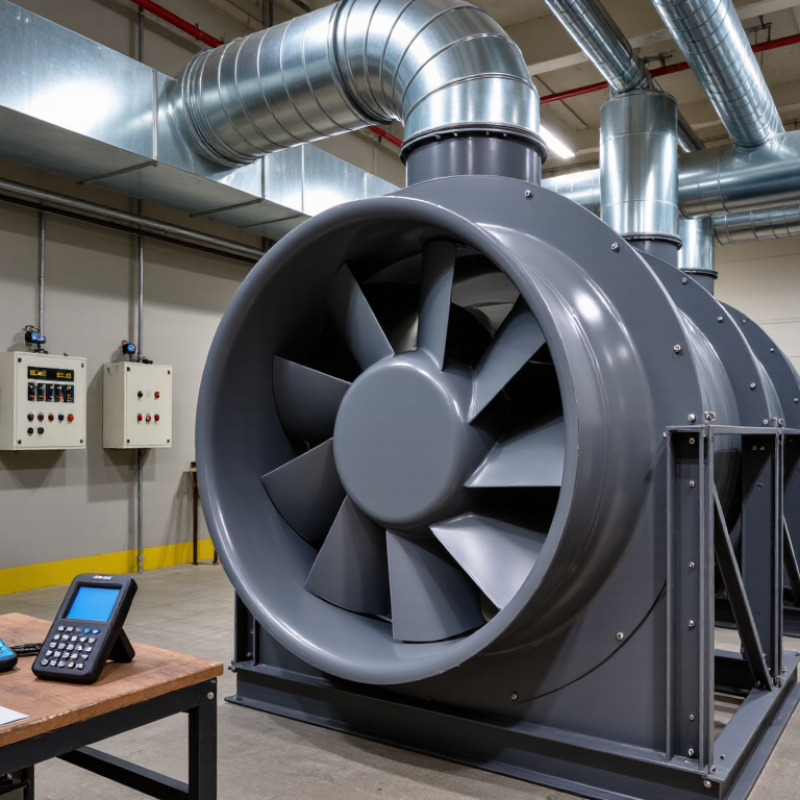
How to Choose a High Temperature Axial Smoke Exhaust Fan?

What Is a High Temperature Axial Smoke Exhaust Fan?

A high-temperature axial smoke exhaust fan is a powered ventilator designed to remove hot smoke and gases during a fire. Its impeller moves air parallel to the fan shaft, allowing a large volume of air to pass through a relatively direct path. You may see one mounted on a roof, wall, or duct. In an emergency, it must keep operating at its specified temperature for a tested duration. The rating matters. EN 12101-3:2015 sets requirements and test methods for powered smoke and heat exhaust ventilators; check the tested temperature-time class, not just a product’s “high-temperature” label.

Smoke control is a system, not a fan in isolation. Duct resistance, installation position, power supply, and control signals can all affect performance. NFPA’s report Fire Loss in the United States During 2023 estimates about 1.39 million fires and 3,670 civilian fire deaths in the United States. Those figures describe the wider fire risk, not fan performance. A Fire Smoke Axial Flow Fan should therefore be selected against the project’s smoke-control design and verified operating conditions. I still find labels easy to misread: a high temperature rating alone does not confirm adequate airflow once the fan is installed. Check the certified test documentation and the system’s required airflow and pressure.

How Does an Axial Smoke Exhaust Fan Move Hot Smoke?

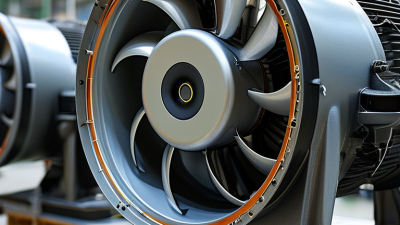
An axial smoke exhaust fan moves hot smoke along the fan’s axis. Rotating blades add momentum, drawing smoke through the inlet and pushing it into a discharge duct or outdoors. The flow resembles a strong, steady stream across the fan, rather than air turning sharply inside the housing. A Fire Smoke Exhaust Fan must still overcome duct resistance, pressure losses, and changing conditions during a fire.

Smoke rises because it is hotter and less dense than surrounding air. The fan helps remove that upper smoke layer, but its real performance depends on airflow, system pressure, and installation details. EN 12101-3:2015 classifies smoke-control fans by temperature and operating time; examples include F300 at 300°C for 60 minutes and F400 at 400°C for 120 minutes. These ratings describe tested performance, not a guarantee that every installed system will deliver the same airflow. A detail worth reconsidering: selecting by temperature rating alone can miss the pressure demands of the actual duct layout.

Tips: Check the fan curve against the system’s required airflow and pressure. Confirm the duty rating, clearances, and discharge route. Keep the smoke path unobstructed; a closed damper or tight bend can reduce extraction. During commissioning, measured airflow may differ from the design estimate. Don’t assume—it should be verified.

How to Choose a High Temperature Axial Smoke Exhaust Fan? - How Does an Axial Smoke Exhaust Fan Move Hot Smoke?
Selection or Operating Factor What to Check Practical Guidance
How the fan moves smoke An axial fan’s rotating blades add energy to the gas and move it mainly parallel to the fan shaft. The fan creates a pressure difference that draws smoke into the inlet and pushes it toward the discharge point. The casing and connected ductwork guide the flow.
Smoke-control duty Required smoke extraction rate, building layout, fire scenario, and applicable local regulations. Determine the required airflow through a smoke-control design or engineering calculation. Do not select a fan from room volume alone.
Airflow and system resistance Fan airflow at the system’s actual static pressure, including losses from ducts, bends, dampers, grilles, and discharge openings. Compare the fan performance curve with the calculated system resistance. A fan’s stated free-air flow may not represent its delivered flow once connected to a system.
High-temperature classification The tested temperature-and-duration class required by the project and the applicable edition of the relevant standard. EN 12101-3 classifications include F200 (200°C for 120 minutes), F300 (300°C for 60 minutes), F400 (400°C for 120 minutes), F600 (600°C for 60 minutes), and F842 (842°C for 30 minutes). Confirm the required class and certification for the intended application.
Fan and motor arrangement Whether the complete fan assembly is suitable for the required smoke temperature, operating duration, and installation orientation. Check the manufacturer’s certified configuration, including motor location, cooling arrangement, bearings, wiring, and any temperature limits. A standard ventilation motor is not automatically suitable for smoke extraction.
Impeller and casing Temperature suitability, mechanical strength, corrosion exposure, and compatibility with the fan’s certified test configuration. Choose materials and construction for the specified fire duty and environment. Avoid modifications that could affect structural integrity or certification.
Duct and discharge layout Duct dimensions, route, bends, transitions, supports, outlet location, and possible recirculation of discharged smoke. Keep the airflow path consistent with the approved design. Duct and mounting arrangements must withstand the specified conditions and comply with applicable fire and building requirements.
Airflow calculation For a uniform duct section, the relationship between volumetric flow rate, cross-sectional area, and average air velocity. Use Q = A × v, where Q is volumetric flow rate, A is duct area, and v is average velocity. This relationship helps check a design but does not replace a smoke-control calculation or fan-curve assessment.
Power supply and controls Required power source, control sequence, emergency operation, cable protection, and interaction with dampers or other smoke-control equipment. Coordinate the fan with the building’s fire and smoke-control strategy. Verify that power and control components meet the project requirements for the intended operating period.
Installation and commissioning Specified rotation direction, electrical connections, clearances, vibration, airflow direction, and system performance. Install and test the fan according to its approved documentation. Commission the complete system and confirm that the measured operation matches the design requirements.

Which Smoke Extraction Requirements Should You Assess?

Which smoke extraction requirements should you assess? Start with the design fire and required exhaust flow. A smoke-control analysis should account for fire size, plume behavior, smoke-layer height, and acceptable visibility and temperature. NFPA 92 provides engineering methods for evaluating these conditions. Check the path. Measure duct length, bends, dampers, and outlet restrictions; each can increase system resistance and reduce delivered airflow. Fan capacity on a catalog sheet is not the same as airflow at the installed operating point.

Temperature rating and exposure time must match the project specification. EN 12101-3 classifies smoke-control fans by temperature and duration; examples include F300 for 300°C over 60 minutes and F400 for 400°C over 120 minutes. Confirm the required class rather than choosing by temperature alone. Small gaps matter. Review fan location, wiring, control signals, and emergency power against the tested system configuration. A high-temperature rating cannot compensate for unsuitable components or poor installation.

For Axial Hvac Fans, assess the required airflow and static pressure together, then verify both against the fan curve. Check whether the system must operate at normal temperatures as well as during a fire; those duties can require different operating points. Consider corrosion, weather exposure, access for inspection, and noise where relevant. A quiet fan may still fail the smoke duty. Recheck assumptions about open dampers and unobstructed discharge: real installations do not always behave like drawings. Use the project’s fire strategy and applicable local requirements to confirm the final selection.

How Do Temperature Ratings and Airflow Specifications Compare?

When comparing high-temperature axial smoke exhaust fans, treat temperature rating and airflow as separate specifications. A temperature figure should state both the operating temperature and the time it can be sustained. Some ratings apply only under defined test conditions, not continuous everyday operation. Check whether the motor, wiring, bearings, and fan casing share the same limits. That detail matters. A high casing rating alone does not prove the whole assembly can perform safely at that temperature.

Airflow figures need similar scrutiny. A published value may describe free-air delivery, measured with little resistance. Real installations include ducts, grilles, bends, and dampers, all of which reduce flow. Compare the fan curve with the system’s expected static pressure, rather than choosing by the largest cubic-feet-per-minute number. If the specification omits pressure or test conditions, ask for clarification. A neat number can hide a poor match.

For a practical comparison, record the required temperature and exposure duration, then check the airflow at the actual operating pressure. Also confirm whether performance changes at elevated temperatures; hot air is less dense, which can affect mass flow and cooling. I would not trust a single headline number. Even with a clear curve, installation details can shift the result, so leave room for verification during commissioning.

Which Materials and Motor Features Suit High-Heat Operation?

Choosing materials for a high-temperature axial smoke exhaust fan starts with the actual air temperature and exposure time. A casing made from suitable coated steel can resist heat and corrosion, while the impeller needs stable geometry under thermal stress. Check the manufacturer’s temperature rating and test conditions; a brief peak rating may not mean continuous operation at that temperature. Details matter.

The shaft and bearings also face demanding conditions. Heat can thin lubricant and shorten bearing life, so confirm the specified bearing arrangement, lubrication method, and service interval. For a motor exposed to hot airflow, look for insulation and temperature ratings appropriate to the duty. Some designs place the motor outside the hottest airstream, reducing thermal exposure. This is not automatically better: installation layout and cooling airflow still matter.

Ask for documented performance data, including operating temperature, duration, and airflow conditions. Verify that the fan’s materials, motor protection, and control equipment match the intended installation. A useful detail is the sensor location: a reading near the motor may differ from the temperature inside the duct. Even a well-rated unit can fail early if airflow is obstructed or maintenance is neglected. I would not choose by temperature number alone; it is an easy shortcut, but often an incomplete one.

What Installation, Safety, and Maintenance Factors Matter?

A high-temperature axial smoke exhaust fan must match the building’s smoke-control design, not just the required airflow. Check its certified temperature and operating duration against the project documents. Confirm that duct resistance, inlet conditions, and discharge location suit the selected fan. A Hvac Exhaust Fan label alone does not prove smoke-duty suitability. Ask a qualified engineer to review the selection and installation details.

Location matters. Keep the intake clear of stored materials, debris, and nearby obstructions that could restrict airflow. Use supports designed for the fan’s weight, vibration, and operating conditions. Check that access panels and service clearances remain usable after installation. A drawing can look perfect; the roof rarely does. Verify electrical connections, protective devices, and control signals against the approved design, and have qualified personnel test the system before handover.

During commissioning, record airflow, motor current, vibration, and control response under the specified test conditions. Small changes can reveal trouble. Keep those readings for comparison during scheduled inspections. With power safely isolated, inspect blades, fasteners, bearings, guards, and wiring for wear, deposits, or heat damage. Follow the maintenance instructions and site safety procedures; never assume a fan is cool or safe to approach after operation. Inspection intervals should reflect operating hours, environment, and the equipment maker’s guidance. Dust buildup is easy to miss. So are loose connections. Recheck findings after repairs, since a quiet test may not reproduce real smoke-control conditions.

FAQS

How does an axial smoke exhaust fan move smoke?

Its rotating blades draw smoke through the inlet and push it along the fan’s axis. The flow continues into a duct or outdoors.

Why does smoke extraction depend on more than fan capacity?

Duct bends, dampers, and outlet restrictions add resistance. A catalog airflow figure may not match the airflow delivered after installation.

What should be checked when selecting a smoke exhaust fan?

Match the fan curve to required airflow and system pressure. Confirm the duty rating, clearances, and discharge route.

Why do temperature rating and operating time both matter?

A rating describes tested performance at a specified temperature and duration. Temperature alone does not show whether the fan suits the project.

Which details can reduce smoke extraction during a fire?

A closed damper, tight duct bend, or obstructed outlet can restrict flow. Small layout details matter.

What materials and components need attention in high heat?

Check casing and impeller suitability, plus shaft and bearing arrangements. Heat can thin lubricant and shorten bearing life.

How should the motor be protected from hot airflow?

Confirm that motor insulation, protection, and temperature ratings suit the duty. Some designs keep the motor outside the hottest airflow, but layout and cooling still matter.

How can a project confirm actual fan performance?

Measure airflow during commissioning and compare it with the design requirement. I would not rely on drawings alone; assumptions can be wrong.

Conclusion

Choosing a high temperature axial smoke exhaust fan begins with understanding its role: it moves hot smoke and gases along the fan’s axis to support smoke extraction during high-heat events. Assess the building layout, expected smoke volume, duct resistance, operating duration, and required airflow before comparing models. Temperature ratings should match the anticipated conditions, while airflow and pressure specifications should suit the size and configuration of the extraction system. A High Temperature Resistant Fire Smoke Exhaust Axial Fan should also be evaluated for heat-tolerant construction, durable impeller materials, and motor features designed for reliable operation at elevated temperatures.

Installation and ongoing care are just as important as fan selection. Confirm that the mounting location, electrical supply, clearances, and airflow direction are appropriate, and follow applicable project safety requirements. Plan regular inspections to check for damage, loose connections, unusual vibration, or buildup that could restrict airflow. Matching performance specifications with suitable materials, careful installation, and consistent maintenance helps ensure dependable smoke extraction when it is needed.
Isabella

Isabella

Isabella is a dedicated marketing professional with extensive expertise in the field of air conditioning and ventilation solutions. With a keen understanding of the company's core products, which include an array of fans—such as fire smoke exhaust fans, axial fans, and centrifugal fans—alongside......
Previous Top 10 High Temp Resistant Fire Smoke Exhaust Axial Fans