Leave Your Message
-
Phone
-
Whatsapp
Picking a constant temperature and humidity AHU in 2026? Honestly, it takes way more than just comparing airflow, price, and those tidy efficiency numbers in the catalog. Real projects have a way of exposing the weak spots. A unit can look rock solid holding 22°C in a showroom, then start drifting on muggy summer mornings, when doors are opening all the time, or when it's only running at partial load. At the end of the day, the right choice starts with the room—not the brochure.
So what do experienced HVAC engineers actually look at? Well, they dig into heat loads, occupancy, filtration, fresh-air needs, control accuracy, and seasonal humidity. They'll also check things like coil selection, fan pressure, where sensors are placed, condensate management, and whether there's enough access for cleaning. It's the little stuff that gets you. Put a sensor too close to a supply outlet, and suddenly your readings are way off. Same with a drain line that isn't insulated properly—next thing you know, you've got condensation where you don't want it. These aren't just theory problems; they're real-world issues you deal with on the job.
When you're choosing equipment, a dependable process should really include verified performance data, factory testing, commissioning records, and a clear maintenance plan. It's also worth asking suppliers a few pointed questions: How do you keep accuracy steady at low load? How are alarms documented? And will replacement parts still be available down the road? On top of that, don't forget that local building, electrical, fire, and energy requirements need to be checked by qualified professionals. See, a Fire Smoke Exhaust Fan With High Temperature Resistance has a different safety job. It's not meant to stand in for humidity control. And honestly? Performance has to be measured.
Some specs can look great on paper, but they don't really tell you how the system will operate in the real world. That's worth thinking about. Energy savings? They can disappear pretty fast if controls aren't tuned properly or filters get clogged. By 2026, the best AHU choice will be the one that balances stable conditions, serviceability, verified efficiency, and long-term reliability. Experience definitely helps guide the decision, but at the end of the day, measured evidence should have the final say.
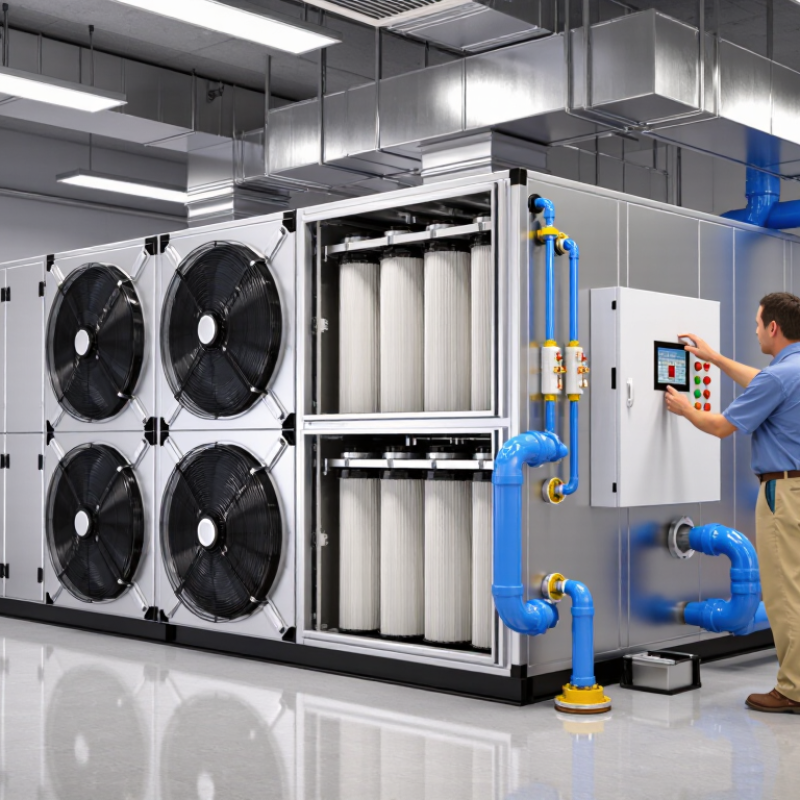
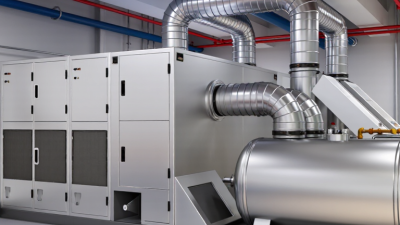
A constant temperature and humidity air handling unit (AHU) is a controlled air system, not simply a cooling box. It filters, heats, cools, dehumidifies, and sometimes humidifies supply air. Sensors measure room temperature and relative humidity continuously. A controller then adjusts coils, valves, dampers, and humidifiers. The goal is stable indoor conditions, such as 22°C and 50% relative humidity, despite changing outdoor weather and internal heat.
This stability matters in laboratories, archives, electronics rooms, and controlled production spaces. ASHRAE Standard 55-2023 evaluates comfort through PMV and PPD methods. Its common comfort range targets fewer than 10% dissatisfied occupants, but comfort is not a universal fixed number. Equipment selection should follow the room’s process limits, not a copied setpoint. A small sensor error can quietly damage sensitive materials.
Practical design starts with load calculations, airflow distribution, and sensor placement. The U.S. Department of Energy reports that HVAC systems can represent about 40% of commercial building energy use. Overcooling air and reheating it wastes power. ASHRAE Handbook—HVAC Systems and Equipment, 2024, emphasizes control coordination and proper equipment selection. In field operation, humidity often changes slower than temperature. That makes unstable control loops easy to miss. A commissioning test should record temperature and humidity at several room locations, under occupied and unoccupied conditions. Perfect constancy is rarely realistic. Candor is better than an impressive specification.
| AHU System Type | Typical Temperature Control | Typical Relative Humidity Control | Common Airflow Range | Temperature Stability | Humidity Stability | Typical Applications | Key Selection Consideration |
|---|---|---|---|---|---|---|---|
| Single-Zone Constant Temperature and Humidity AHU | 18–26°C, depending on process requirements | 40–60% RH | 1,000–30,000 m³/h | Approximately ±1.0°C with suitable controls | Approximately ±5% RH with correct humidification and dehumidification capacity | General manufacturing areas, laboratories, storage rooms, and test spaces | Confirm the design load for outdoor air, occupants, lighting, equipment, and product heat. |
| Precision Process AHU | 20–24°C | 45–55% RH | 3,000–50,000 m³/h | Approximately ±0.5°C when properly commissioned | Approximately ±3% RH | Electronics production, precision assembly, metrology, and controlled process rooms | Specify sensor accuracy, control response time, air distribution, and low-load performance. |
| Cleanroom Constant Temperature and Humidity AHU | 18–24°C | 40–60% RH | 5,000–100,000 m³/h | Approximately ±0.5–1.0°C | Approximately ±3–5% RH | Pharmaceutical, medical-device, healthcare, and high-grade laboratory environments | Evaluate filtration stages, pressure cascade, air-change rate, cleanliness classification, and validation requirements. |
| Dedicated Outdoor Air System with Temperature and Humidity Control | Supply air commonly controlled between 12–20°C | Designed to control outdoor-air moisture load; room RH commonly 40–60% | 1,000–40,000 m³/h | Approximately ±1.0°C at the supply-air sensor | Dependent on dew-point control and room load | Buildings requiring high ventilation rates, laboratories, hospitals, and humid climates | Use entering-air psychrometric calculations and select adequate latent cooling or desiccant capacity. |
| Low-Temperature Storage AHU | 2–15°C, based on stored product requirements | Typically 45–65% RH, where product specifications permit | 2,000–40,000 m³/h | Approximately ±1.0–2.0°C | Approximately ±5–8% RH | Archival storage, specialty materials, food-related storage, and temperature-sensitive inventory | Prevent surface condensation, verify coil frost protection, and define allowable recovery time after door opening. |
| High-Humidity Climate AHU | 20–28°C | Commonly 50–65% RH | 3,000–60,000 m³/h | Approximately ±1.0°C | Approximately ±5% RH | Coastal facilities, tropical production spaces, museums, and humidity-sensitive warehouses | Prioritize latent cooling capacity, corrosion-resistant components, condensate management, and vapor-tight insulation. |
| Low-Humidity Desiccant-Assisted AHU | 18–25°C | 20–40% RH; lower levels may be achievable with specialized design | 2,000–30,000 m³/h | Approximately ±1.0°C | Approximately ±3–5% RH | Battery manufacturing, dry rooms, hygroscopic material handling, and specialized laboratories | Compare regeneration energy, desiccant performance, leakage rate, and required dew-point temperature. |
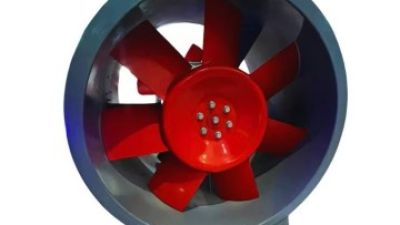
High-temperature fire smoke exhaust fans are essential for maintaining tenable escape routes and supporting firefighting operations in industrial and commercial buildings. The National Fire Protection Association reported approximately 1.5 million fires in the United States in 2022, causing thousands of civilian deaths and injuries, demonstrating the importance of dependable smoke-control systems. Designed for demanding environments, these fans can provide strong smoke extraction, stable airflow, and continuous operation under extreme heat when properly selected and installed according to project requirements.
A durable fire smoke exhaust fan should combine a robust, vibration-resistant structure with efficient motor performance and low operating noise. Models engineered for high air volume can help clear smoke from factories, warehouses, public buildings, and commercial facilities, while streamlined installation reduces commissioning time. Performance should be verified against applicable smoke-control requirements, such as the EN 12101-3 framework, which covers fire-resistance testing for smoke and heat control fans at elevated temperatures and specified operating periods. Working with experienced China-based manufacturers and suppliers can provide access to customizable, energy-efficient solutions designed for long service life, reliable operation, and safer industrial ventilation.
Check the coil, humidifier, insulated panels, and sloped drain pan. The coil should transfer heat steadily during partial-load operation. The humidifier should prevent dry areas in winter. Small drainage defects matter.
Review tested efficiency, dust-holding capacity, gasket sealing, and replacement access. A finer filter can increase pressure drop and fan energy use. Measure pressure before and after the filter during commissioning.
Yes. Poor gasket compression can allow particles to bypass the filter. The paper specification may look strong, but installation can weaken performance. Measure both sides.
Place calibrated sensors where room conditions are meaningful. Avoid locations beside turbulent supply air. Poor placement can create false readings and unstable control decisions.
Variable-speed fans and modulating valves can reduce temperature and humidity overshoot. PID control should adjust gradually instead of repeatedly hunting. Trend data can reveal blocked filters, drifting sensors, and unstable humidity.
Remote access can speed diagnosis and reduce unnecessary site visits. However, permissions and network security require careful management. Advanced controls still need seasonal testing and sensor recalibration.
Record heat load, fresh-air ratio, seasonal dew points, ceiling height, and service clearance. Confirm water temperature, electrical supply, drain slope, trap design, and duct pressure. Leave enough space for doors and filter replacement.
Request selection calculations, wiring diagrams, control sequences, test records, and commissioning procedures. Clarify warranty response times, spare-parts availability, software access, and technician qualifications. Get important promises in writing.
Some AHUs perform well at design load but become unstable at low load. Test airflow, humidity, alarms, and room conditions after startup. Recheck the design when actual readings disagree. No choice is perfect.
Choosing a Constant Temperature & Humidity Ahu in 2026 requires a clear understanding of the environment, equipment, and operating goals. Start by defining the required temperature and humidity ranges, allowable fluctuations, air quality level, occupancy, process heat, and seasonal conditions. Then calculate the necessary airflow, cooling capacity, heating demand, and humidification load to ensure stable performance under both normal and peak conditions. Proper sizing helps prevent energy waste, uneven control, and unnecessary equipment stress.
Next, compare the AHU’s coils, fans, filters, humidification method, sensors, and control system. Consider energy efficiency, response speed, reliability, cleaning access, filter replacement, and long-term maintenance requirements. Verify that the selected system suits the installation space, electrical and drainage conditions, ventilation needs, and applicable safety and industry standards. Finally, evaluate supplier support, documentation, commissioning services, spare-part availability, and technical response capabilities. A well-selected Constant Temperature & Humidity Ahu should deliver precise control, dependable operation, manageable maintenance, and efficient performance throughout its service life.