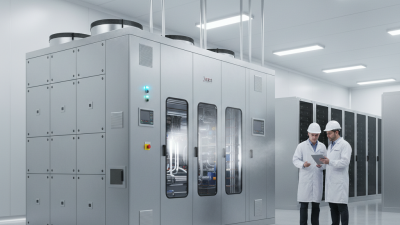
Choosing a horizontal air handling unit isn’t just about checking airflow ratings and the price tag—it’s more involved than that. You’ve got to make sure it really fits the building’s layout, the climate, how many people are using the space, and how you plan to maintain it. For instance, a compact unit might sit nicely above a corridor, but those service panels could be a pain to reach later on—something that's easy to overlook at first glance.
Veteran HVAC pros will look into subtler details like air volume, external static pressure, filtration quality, coil efficiency, fan types, and how loud it is. They also consider how the unit performs during different seasons. Take a humid coastal warehouse—here, you’d want better corrosion resistance and improved condensate management. Or if you’re working on a hospital, tighter filtration and reliable monitoring become non-negotiable. Every project has its own quirks and risks.
Don’t forget to inspect the casing carefully. Things like thermal bridges, loose access panels, or poor insulation can cost you energy over time. Make sure the drain pan slopes properly and is easy to get to for cleaning. And ask yourself—are replacement filters and fan parts easily available locally? Because those small details really impact the unit’s reliability. It’s not just about what the catalog says.
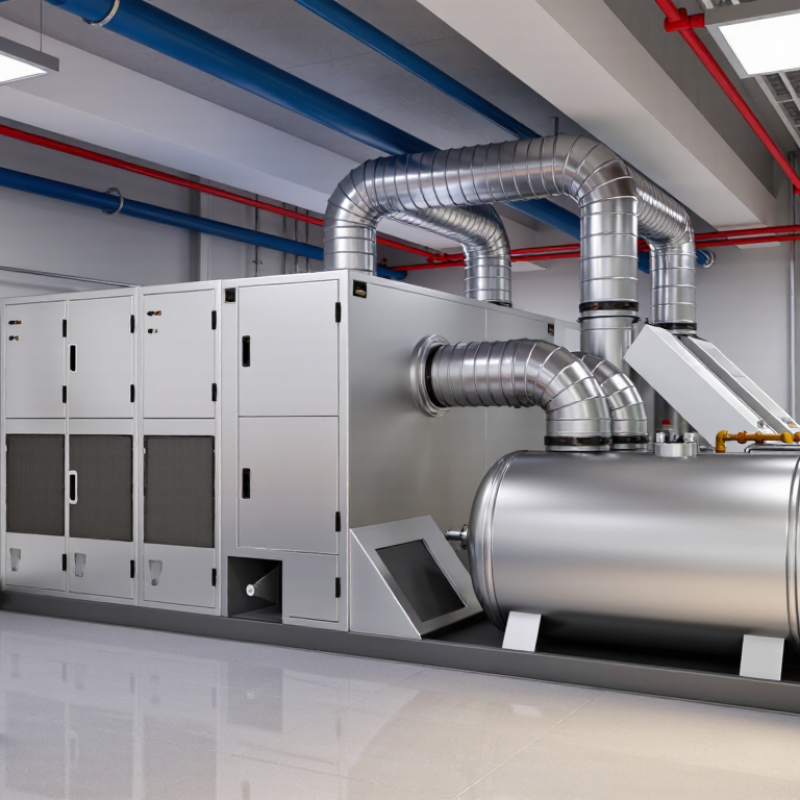
Also, even if a horizontal stainless steel water tank appears next to the air handling unit on a schedule, don’t assume it’s connected in a way that impacts performance. The tank’s capacity doesn’t tell the whole story when it comes to the air system’s efficiency. It’s really about coordinating both systems with accurate drawings, matching connection sizes, controls, and making sure there’s enough space for maintenance. I always double-check these details—I’ve seen even experienced teams overlook tight plant room spaces. No single method is foolproof. The best choices come from a mix of verified data, on-site measurements, manufacturer info, and feedback from the operators who’ll be working with the system every day.
Define Airflow Duty Using ASHRAE 62.1 Ventilation Rates
How to Choose a Horizontal Air Handling Unit
Select the horizontal air handling unit from its ventilation duty, not only its cooling capacity. ASHRAE Standard 62.1-2022, Table 6-1, lists office ventilation rates of 5 cfm per person and 0.06 cfm per square foot. For 50 occupants in a 10,000-square-foot office, the breathing-zone requirement becomes 850 cfm. This calculation precedes ventilation efficiency, occupancy diversity, and duct losses.
Keep the numbers visible.
The designer should apply ASHRAE’s breathing-zone equation, Vbz = RpPz + RaAz, before choosing the fan and outdoor-air section. A horizontal unit may require more supply airflow when filters become loaded or coils create higher pressure drop. CIBSE Guide B2: Ventilation and Air Conditioning also treats filtration, air distribution, and pressure resistance as linked design decisions. Specify outdoor-air measurement, damper control, filter pressure-drop limits, and access for cleaning.
Do not assume maximum occupancy lasts all day. Demand-controlled ventilation can reduce outdoor air during lighter use, but sensors need correct placement and commissioning. The U.S. Department of Energy’s 2023 Commercial Buildings Energy Consumption Survey shows that ventilation and cooling loads vary widely by building activity, schedule, and climate. That variation matters. A neat spreadsheet can still miss a crowded meeting room, a partly closed damper, or a dirty filter. Recheck the duty at design occupancy, minimum occupancy, and end-of-filter-life conditions.
Size Cooling and Heating Coils from Peak Load and Entering Air Data
How to Choose a Horizontal Air Handling Unit
Size Cooling and Heating Coils from Peak Load and Entering Air Data
Selecting coils for a horizontal air handling unit starts with measured design conditions, not cabinet dimensions. Determine the peak sensible and latent cooling loads for the served space. Then record entering air dry-bulb and wet-bulb temperatures, airflow, and outdoor air percentage. A cooling coil facing 30°C air needs a different capacity than one facing 24°C air.
Use the peak load to calculate the required coil capacity. Check chilled-water temperature, water flow, and the desired leaving-air temperature. For heating, confirm the coldest entering-air condition, heating medium temperature, and required discharge temperature.
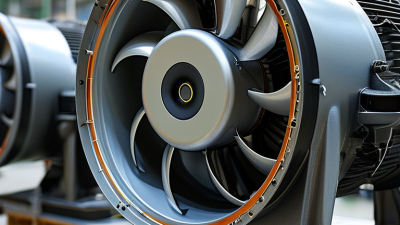
Airflow must match the coil selection. Oversized Air Conditioning Fans may increase noise, energy use, and coil face velocity.
Keep the details visible.
A practical selection should also check coil pressure drop, fin spacing, frost risk, condensate drainage, and access for cleaning. High humidity may require more rows or a lower face velocity to remove moisture effectively. In real projects, entering air is rarely uniform. Poor mixing can create unexpected hot or cold zones across the coil.
I have seen selections fail because designers used average weather data instead of peak conditions. That shortcut looks efficient, but it can leave rooms warm during the worst afternoon.
Still, adding a large safety margin is not automatically safer. It may cause short cycling, weak humidity control, and unnecessary cost. Recheck the load, airflow, and entering conditions before approving the final coil.
Select MERV 13 or Higher Filters for Enhanced Indoor Air Quality
When choosing a horizontal air handling unit, give the filter section serious attention. MERV 13 or higher filters can capture fine particles, including many respiratory aerosols and airborne dust. They support cleaner indoor air in offices, schools, clinics, and busy public spaces.
Start by checking the unit’s available filter depth and face area. A deeper filter usually creates less resistance than a shallow filter. Your design team must also confirm fan capacity, coil performance, and the expected pressure drop. A filter that looks excellent on paper may restrict airflow after several weeks. Measure it.
During commissioning, inspect the filter rack for bypass gaps. Even small openings can allow unfiltered air around the media. Use a differential pressure gauge, record the initial reading, and set a practical replacement schedule. Occupancy, construction dust, humidity, and outdoor pollution can change filter loading quickly. I have seen clean-looking filters perform poorly because their seals were loose. That detail is easy to miss.
An Air Cooled Cooling Tower may serve the same facility, but it does not replace proper air filtration inside the air handling unit. Select filters according to verified test data, not marketing claims alone. MERV 13 is a sensible baseline, while higher ratings require careful fan and energy checks. Sometimes, a lower-pressure filter changed consistently performs better than an excellent filter left overloaded. Review the choice after real operating data appears.
Match Fan Capacity to Total Static Pressure and Target Air Velocity
Choosing a horizontal air handling unit starts with the fan duty, not the cabinet dimensions. Estimate required airflow from the room load, ventilation rate, and target air velocity. A fan that delivers 10,000 m³/h at low pressure may fail when the system resistance increases.
Total static pressure includes duct friction, bends, dampers, filters, coils, grilles, and terminal devices. Measure each loss where possible. Clean filters can hide future pressure demand. I have seen systems perform well during commissioning, then lose airflow after filters became partially loaded. Allowing a realistic operating margin is safer than selecting the largest fan available.
Check the fan curve at the actual duty point. The selected fan should provide the required airflow at the calculated static pressure, while remaining near an efficient operating range. Excessive velocity creates noise, drafts, and higher energy use. Low velocity can require oversized ducts and a larger unit. Both choices affect installation cost.
Use site measurements to challenge the design. Duct dimensions may differ from drawings. A partially closed damper can change the pressure balance. Verify airflow with calibrated instruments after installation, then adjust controls gradually. My own early estimates have sometimes been too optimistic, especially around coil resistance. That is a useful reminder: fan capacity is not a single number. It depends on pressure, velocity, and real operating conditions.
Verify Casing Thermal Performance with a Maximum U-Value of 0.30
How to Choose a Horizontal Air Handling Unit
When selecting a horizontal air handling unit, inspect casing thermal performance before comparing airflow or footprint. Specify a maximum U-value of 0.30 W/m²·K for the complete casing assembly. This limit helps reduce heat transfer across panels and protects conditioned air from unnecessary losses. Ask for tested or calculated data covering panels, frames, access doors, joints, and inspection sections. A panel may perform well alone, yet weak door seals can reduce the real result.
In practice, review the unit’s construction drawings and thermal test method together. Confirm the stated U-value applies to the actual panel thickness, insulation type, and installation direction. Horizontal units often sit above ceilings, where access is limited and condensation damage may remain hidden. Check thermal bridges around supports, filter sections, coil connections, and service doors. I have seen specifications focus on the panel core while overlooking metal framing. That oversight can distort the final performance. It is worth requesting independent verification when the unit serves a humid space or operates continuously.
Tips: Mark every casing penetration on the submittal drawing. Check gasket compression after assembly. Leave room for door adjustment and inspection. Do not accept a generic U-value without boundary conditions. If the calculation seems unusually optimistic, question it. Real installations are rarely perfect.
Compare Fan Efficiency Using SFP and Motor Efficiency Ratings
Choosing a horizontal air handling unit requires more than checking airflow and cabinet size. Fan efficiency deserves equal attention, especially when the unit runs continuously. Specific Fan Power, or SFP, measures electrical input against delivered airflow. Lower SFP usually means lower operating cost, but only when measured at the real design duty.
Ask for the fan curve, brake power, and motor efficiency rating. IE3 or IE4 motors can reduce losses, yet an efficient motor cannot correct an incorrectly selected fan. A dirty filter, tight coil, or undersized duct may push the fan far from its best efficiency point. During commissioning, record airflow, pressure, voltage, and current. A meter reading at the control panel can expose surprises.
The neatest calculation can still mislead.
Field conditions change. For example, a unit serving an Evaporative Air Cooling Tower may face moisture, high resistance, and unusual seasonal loads. Check SFP at minimum, normal, and peak airflow, not just one catalogue point. Variable-speed control can improve part-load performance, but frequent hunting wastes energy and may shorten equipment life. I have seen a lower-rated motor perform acceptably because the fan was carefully matched. I have also seen a premium efficiency rating fail to deliver savings after filters became clogged. Keep the test records. Recheck them after several months.
Check AHU Access, Drainage, Controls, and ASHRAE 90.1 Compliance
Choosing a horizontal air handling unit requires more than comparing airflow and cabinet size. Start with service access. Leave enough clearance to remove filters, coils, belts, and motors without dismantling nearby ductwork. A technician should reach the fan section with a flashlight and basic tools. That detail matters during a winter breakdown. Removable panels, interior lighting, and smooth insulation also reduce maintenance errors.
Drainage deserves equal attention. The drain pan should slope toward the outlet and remain visible after installation. Confirm the trap depth, pipe size, and local condensate requirements. A poorly sized trap can pull air through the drain and leave water behind. I have seen small installation shortcuts create persistent odors and ceiling stains. They seemed harmless at handover. They were not.
Controls should support stable comfort without wasting energy. Specify reliable temperature and humidity sensors, fan speed control, timed schedules, and clear alarms. Integrate cooling, heating, outside-air dampers, and filtration status into one readable interface. This is especially important when the unit supports Cooling Tower Air Conditioning systems. Check the selected controls against the adopted ASHRAE 90.1 edition, including fan power, motor efficiency, setbacks, ventilation control, and automatic shutoff provisions. Request commissioning records and point-to-point testing. Do not assume factory settings fit the building. A perfect checklist is unlikely. Careful verification still prevents expensive surprises.
How to Choose a Horizontal Air Handling Unit
Core verification items for AHU access, drainage, controls, and ASHRAE 90.1 compliance.
Use this checklist during submittal review. Confirm removable access for filters, coils, fans, and dampers; verify drain-pan slope, trap sizing, and cleanout access; define sensor, actuator, alarm, and sequence-of-operation requirements; and document applicable fan-power, economizer, heat-recovery, and automatic-control provisions under the adopted edition of ASHRAE 90.1. The item counts represent common review points, not code limits.
Conclusion
Choosing a Horizontal Air Handling Unit requires balancing ventilation, thermal performance, energy use, and long-term serviceability. Begin by defining the required airflow and outdoor-air duty according to ASHRAE 62.1 ventilation rates. Size the cooling and heating coils using peak load calculations and accurate entering-air conditions, then select MERV 13 or higher filters when enhanced indoor air quality is a priority. The fan should provide the required airflow against the system’s total static pressure while maintaining the intended air velocity.
A reliable selection also depends on casing and component performance. Verify that the casing meets the specified thermal standard, including a maximum U-value of 0.30, and compare fan options using specific fan power, motor efficiency, and operating conditions. Finally, review access for inspection and maintenance, condensate drainage, control integration, and compliance with ASHRAE 90.1. Considering these factors together helps ensure efficient, hygienic, durable, and practical air-handling performance.