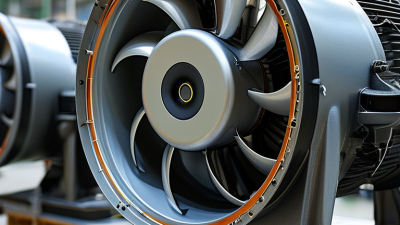
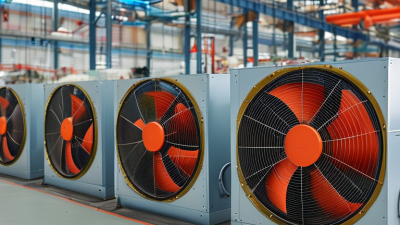
Picking the right high flow fire smoke exhaust fan isn’t just about checking airflow numbers. In real buildings, smoke moves in ways that a catalogue won’t fully capture—it changes with corridor length, ceiling height, shaft design, and how long the emergency system has to run. A fan that works great in a factory might be a poor fit for an underground car park. Honestly, the small details matter.
This guide walks through ten practical fan types used for smoke control. That includes axial, centrifugal, mixed-flow, roof-mounted, jet, and reversible designs. Each one brings something different when it comes to pressure delivery, space needs, noise control, maintenance access, and installation flexibility. Some models move large air volumes; others handle system resistance better. The right choice comes from measured project conditions—not from glossy catalogue claims.
Temperature capability is another thing that deserves real attention. A Fire Smoke Exhaust Fan With High Temperature Resistance should be judged by documented testing, motor protection, casing materials, bearing design, and emergency-duty performance. Qualified engineers should verify airflow, static pressure, power supply, controls, and installation clearances before signing off. Manufacturer data helps, sure, but field inspection still matters. Sometimes the most expensive fan isn’t the safest option. And sometimes a lower-cost design hides maintenance headaches down the road.
This overview probably won’t answer every project question, and that limitation is worth admitting. Use it as a technical starting point, then confirm the final selection with competent fire-safety professionals and current project requirements. Reliable decisions come from evidence, careful calculation, and an honest look at operating risks.
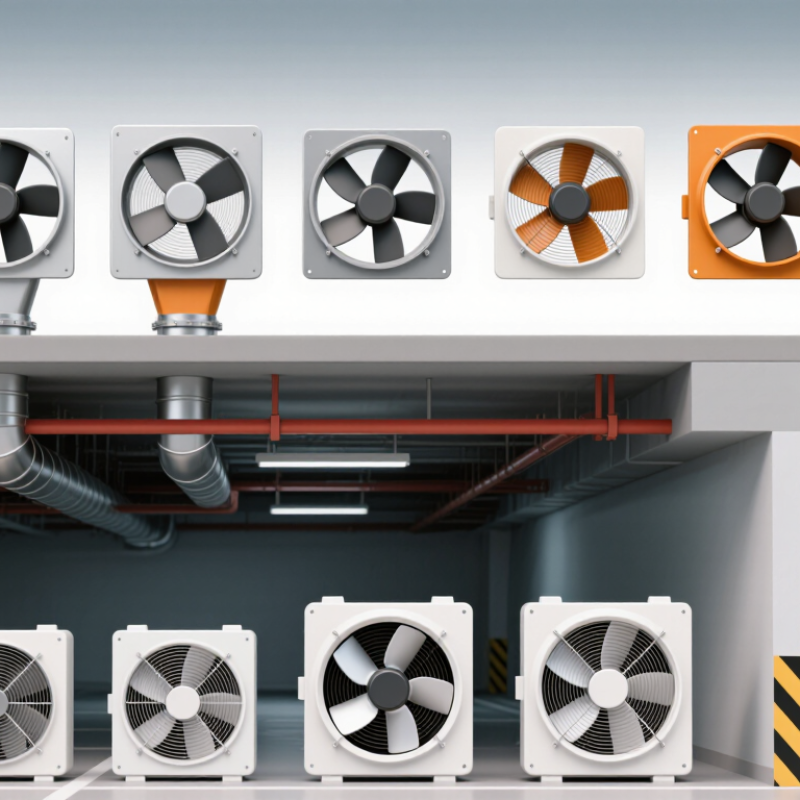
High-flow fire smoke exhaust fans are specialized devices for removing hot smoke during a building fire. They are not ordinary ventilation fans. Their purpose is to control smoke movement, protect escape routes, and support firefighting access. Clear stairwells matter.
These fans operate under severe conditions. They may handle high temperatures, corrosive gases, and sudden pressure changes. Their construction usually includes heat-resistant components, reinforced housings, reliable motors, and tested electrical protection. “High flow” does not mean unlimited airflow. Actual performance depends on duct resistance, pressure loss, fan speed, and system layout. The term is not perfectly standardized, so technical data deserves careful reading.
Common designs include axial fans for large air volumes, centrifugal fans for higher system pressure, jet fans for smoke movement in enclosed areas, and roof-mounted fans for direct extraction. Some systems use reversible models for supply and exhaust duties. Each type suits a different building geometry. In practice, engineers check airflow, temperature rating, operating duration, noise, maintenance access, and emergency controls. A fan may look powerful on paper yet perform poorly after installation. That gap is easy to overlook. Proper selection requires tested documentation, qualified design review, and commissioning under realistic operating conditions. Even small duct changes can alter smoke-control performance.
Top 10 High Flow Fire Smoke Exhaust Fan Types
How Fire Smoke Exhaust Fans Move Heat and Smoke
A Fire Smoke Exhaust Fan does more than remove visible smoke. It manages pressure, temperature, and the movement of toxic gases through designated routes. NFPA’s Fire Loss in the United States During 2022 recorded 3,790 civilian fire deaths and 13,250 injuries. Smoke conditions can become dangerous before flames reach occupants. That timing matters.
High-flow axial fans move large air volumes through shafts and open areas. Centrifugal fans create stronger pressure when ducts resist airflow. Jet fans push smoke horizontally toward extraction points, while reversible units support changing airflow paths. In a real fire, hot gases rise and collect beneath ceilings. Exhaust fans pull this layer toward smoke reservoirs or discharge zones. Replacement air must enter carefully. Otherwise, unstable pressure can spread smoke into stairs, corridors, or refuge areas.
Small details decide performance. Fan capacity should match compartment volume, leakage, fire duration, and the required tenability time. NFPA 92 uses calculated smoke-control methods rather than simple air-change assumptions. NIST fire research also shows that buoyancy and pressure differences strongly influence smoke movement. Models help, but they are not magic. A system may look precise on paper and still underperform after doors open, dampers distort airflow, or maintenance is missed. That uncomfortable gap deserves testing, inspection, and honest review.
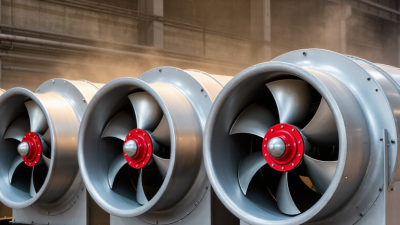
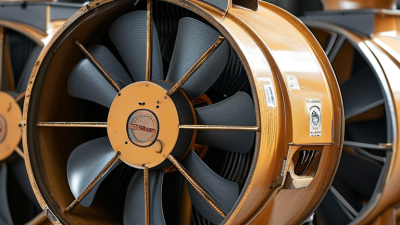
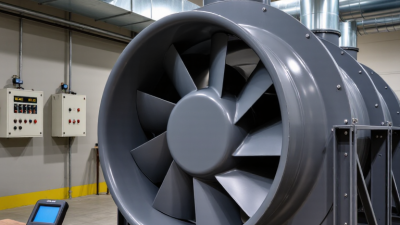
Axial smoke exhaust fans are designed for buildings that must move large volumes of air quickly during a fire event. Their straight-through airflow path supports high-volume discharge with relatively low resistance. A Fire Smoke Axial Flow Fan can serve warehouses, underground car parks, factories, and large public spaces when the system is correctly engineered.
Selection should begin with airflow demand, pressure loss, temperature rating, and operating duration. Check the fan curve against the complete duct system, not only the free-air rating. Field inspections often reveal poor results caused by undersized dampers, sharp duct bends, or blocked discharge paths. Motor protection, emergency power, access panels, and vibration control also deserve careful attention. Small installation details matter.
Tips: Keep the intake clear of stored materials. Confirm fan rotation before commissioning. Test smoke control sequences under realistic conditions. Record airflow, pressure, temperature, and vibration readings. Local fire codes and project specifications should guide final selection. A qualified engineer should verify the design and maintenance plan. Airflow calculations help, but they are not the whole answer. Recheck assumptions after construction, because real buildings rarely match drawings perfectly.
| Rank | Axial Fan Type | Typical Airflow Range | Typical Pressure Range | Typical Smoke-Temperature Duty | Key Design Feature | Common Application | Main Selection Consideration |
|---|---|---|---|---|---|---|---|
| 1 | High-Volume Fixed-Pitch Axial Fan | 20,000–250,000 m³/h | 200–1,200 Pa | 250°C for 2 hours | Fixed blade angle with a simple, robust construction | Large warehouses, factories, and industrial halls | Best suited to systems with a stable duty point; airflow cannot normally be adjusted after installation |
| 2 | Adjustable-Pitch Axial Smoke Fan | 15,000–220,000 m³/h | 300–1,800 Pa | 300°C for 2 hours | Blade angle can be set to match the required airflow and pressure | Car parks, logistics centers, and multi-zone smoke-control systems | Provides better duty-point optimization, but requires correct blade setting and balancing |
| 3 | Reversible Axial Smoke Exhaust Fan | 10,000–160,000 m³/h | 150–1,000 Pa | 250°C for 2 hours | Designed to move air in both rotational directions | Underground car parks, road tunnels, and ventilation systems requiring airflow reversal | Reversible airflow usually reduces peak efficiency compared with a dedicated one-way fan |
| 4 | Two-Speed Axial Smoke Exhaust Fan | 12,000–180,000 m³/h | 200–1,400 Pa | 300°C for 2 hours | Uses separate low-speed and high-speed operating points | Car parks and buildings requiring normal ventilation plus emergency smoke extraction | Requires compatible motor controls, switching equipment, and correctly coordinated fire-mode logic |
| 5 | Jet Fan-Assisted Axial Smoke System | 2,000–50,000 m³/h per fan | 50–700 N thrust equivalent | 250°C for 2 hours | Uses impulse airflow to move smoke toward designated extraction points | Basement and underground car parks with ductless or semi-ductless ventilation | Fan spacing, thrust, ceiling height, and smoke-control modeling are critical to performance |
| 6 | Belt-Driven Axial Smoke Exhaust Fan | 15,000–150,000 m³/h | 250–1,500 Pa | 250°C for 2 hours | Motor is separated from the airstream and drives the impeller through belts | Industrial buildings and applications where motor isolation is required | Belts and bearings need inspection and maintenance; emergency-temperature suitability must be verified |
| 7 | Direct-Drive Axial Smoke Exhaust Fan | 8,000–120,000 m³/h | 150–1,200 Pa | 250°C for 2 hours | Motor is mounted directly on the fan shaft, reducing transmission components | Compact plant rooms, roof-mounted exhaust units, and low-maintenance systems | Motor cooling, access for servicing, and operation in the hot smoke stream must be checked |
| 8 | Roof-Mounted Axial Smoke Ventilator | 10,000–180,000 m³/h | 100–900 Pa | 300°C for 2 hours | Discharges smoke vertically through a roof-mounted casing and weather hood | Warehouses, atriums, production buildings, and large open-plan spaces | Roof loading, weather protection, discharge clearance, and access for replacement are important |
| 9 | Ducted Axial Smoke Exhaust Fan | 10,000–200,000 m³/h | 500–2,000 Pa | 300°C for 2 hours | Installed in a duct system to serve remote or zoned extraction points | Shopping centers, tunnels, industrial facilities, and complex smoke-control networks | Duct resistance, fire dampers, access doors, leakage, and pressure losses affect the final duty |
| 10 | High-Pressure Tube Axial Smoke Fan | 8,000–100,000 m³/h | 800–2,500 Pa | 250°C for 2 hours | Compact cylindrical casing and aerodynamic blades support higher system pressure | Long duct runs, tunnel ventilation, and smoke-extraction systems with high resistance | Higher pressure capability can increase noise, power consumption, and structural requirements |
Engineering note: The airflow, pressure, and temperature figures shown are representative selection ranges rather than universal ratings. Final fan selection should be based on the calculated system duty, smoke-control design, installation conditions, electrical requirements, and the applicable local fire and product-performance standards.
Centrifugal smoke exhaust fans are built for high-pressure systems where long ducts, dampers, and multiple bends resist airflow. Their backward-curved or radial blades can maintain strong performance under demanding conditions. During site inspections, engineers often check airflow at the grille, not only the fan outlet. A powerful fan may still deliver weak extraction if duct friction is underestimated. A properly selected Hvac Exhaust Fan should match the required air volume, static pressure, temperature rating, and operating duration.
For high-rise corridors, underground parking areas, and industrial rooms, fan casing strength matters. Impellers should remain balanced during heat exposure and continuous operation. Access panels also deserve attention. Maintenance becomes difficult when technicians cannot reach bearings, belts, or electrical connections safely. It happens more often than expected. Noise and vibration should be measured after installation, because an acceptable factory test does not guarantee quiet operation on site.
Tips: Confirm the pressure calculation with a qualified engineer. Inspect fire dampers and control signals together. Test the complete system under realistic airflow conditions. Keep clear records of temperature readings, vibration levels, and cleaning dates. Do not rely only on catalogue airflow figures. Field conditions can change quickly. Even careful designs may need adjustment after commissioning, especially when duct routes or room layouts differ from the original drawings.
Roof-mounted fire smoke exhaust fan designs must move hot, contaminated air quickly while surviving harsh roof conditions.
Axial fans suit large airflow volumes and straight discharge paths.
Centrifugal fans handle higher resistance from ducts, dampers, and filters.
Impulse fans can support smoke movement in open parking structures.
Each type needs careful selection.
The fan casing should resist rain, corrosion, vibration, and extreme heat. A raised curb helps prevent standing water from entering the housing. Weatherproof access panels make inspections safer and faster. Fire-rated cabling, protected controls, and emergency power support dependable operation when normal systems fail. The roof structure also needs enough strength for the fan, curb, and maintenance loads.
One detail is easy to miss.
Discharge direction matters. Smoke should not return through air intakes, windows, or nearby equipment.
An Industrial Ventilation Exhaust Fan may provide strong everyday airflow, but smoke-control duty requires suitable temperature ratings and tested performance.
Field inspections often find loose belts, blocked inlets, or poorly sealed curbs. These faults are small, yet they can reduce airflow when minutes matter.
No design is perfect. Engineers should review noise, access, wind exposure, and maintenance records before approving one of the top ten fan types.
Jet fans are a practical smoke-control option for large car parks, tunnels, and industrial enclosures. Unlike traditional ducted systems, they move air through impulse thrust. The fans guide smoke toward dedicated extraction points, while limiting duct congestion and ceiling obstruction. A typical design must consider fan thrust, airflow direction, ceiling height, fire compartments, and escape routes. CFD modelling can test these conditions before installation, but field verification remains essential.
The NFPA report Fire Loss in the United States During 2023 recorded about 1.39 million fires, including 3,670 civilian fire deaths. Smoke movement remains a major life-safety concern. NFPA 92 recommends engineering analysis for smoke-control systems, rather than relying on fan capacity alone. In practice, designers should examine tenability, visibility, carbon monoxide levels, and smoke-layer height. A jet fan may look powerful on paper.
The weak point is often the model. A clean simulation can hide poor boundary assumptions, blocked grilles, or unexpected vehicle layouts. Fans should be tested for thrust, rotation, noise, controls, and fire-temperature performance. Emergency power and staged operation also need realistic commissioning. The SFPE Handbook emphasizes scenario-based analysis because one fire location cannot represent every enclosure. Small details matter: a low beam, a closed shutter, or a parked truck can redirect smoke. Imperfect assumptions deserve review. Rescue teams need clear control panels and readable status indicators during stressful conditions.
Top 10 High Flow Fire Smoke Exhaust Fan Types
Choosing a Fire Smoke Exhaust Fan by Application
Selecting a fire smoke exhaust fan starts with the building layout, not the fan catalogue. Axial fans suit car parks and large halls with high airflow and limited duct resistance. Centrifugal fans provide stronger pressure for long, narrow ducts. Roof-mounted exhaust fans work well in warehouses and atriums, where smoke can rise naturally. Jet fans help move smoke through open parking areas. Mixed-flow models can balance pressure and airflow in compact systems.
Tunnels need durable, reversible fans with reliable smoke-temperature performance. Stairwells and protected escape routes often require controlled pressurisation, not simple extraction. Commercial kitchens may need dedicated exhaust equipment because grease, heat, and fire exposure create different risks. For each application, check airflow, static pressure, temperature rating, running time, noise, power supply, and control response. Small design errors matter.
They can become dangerous.
A practical review should include duct losses, fan placement, access for maintenance, and backup power. Fire-rated performance must match the project specification and applicable local requirements. Qualified fire engineers should verify the complete system, including dampers, sensors, wiring, and automatic controls. In field inspections, neglected belts, blocked grilles, and untested controls appear more often than expected. A powerful fan cannot correct poor installation. The selection process should remain evidence-based, documented, and regularly tested under realistic conditions.
Choosing a fire smoke exhaust fan by application
The chart compares representative airflow capacities commonly used for different smoke-control applications. Values show the midpoint of typical engineering ranges and are intended for preliminary comparison only. Final fan selection must consider fire temperature rating, system resistance, smoke-zone volume, duty or standby requirements, installation position, noise limits, and applicable local fire-safety standards.
It removes smoke, hot gases, and dangerous heat. Visibility can worsen before flames reach people.
Axial fans move large air volumes through open routes. Centrifugal fans provide stronger pressure through long, resistant ducts.
Jet fans push smoke horizontally toward extraction points. They suit large rooms, underground areas, and open parking spaces.
Fresh air must enter through controlled routes. Poor air balance may push smoke into stairs or corridors.
Capacity should match room volume, leakage, heat exposure, and required safe evacuation time. Simple air-change estimates may be insufficient.
No. Models help, but real doors, dampers, and leakage can change airflow. Paper accuracy is not enough.
They should check airflow, static pressure, duct resistance, dampers, temperature ratings, and operating duration.
Duct bends, friction, and grille resistance can reduce extraction. A strong outlet reading may hide weak room airflow.
Technicians should inspect bearings, belts, wiring, impellers, dampers, and access panels. Difficult access often delays maintenance.
Test the entire system under realistic airflow conditions. Record temperature, vibration, cleaning dates, and control responses. Adjustments may still be needed.
High Flow Fire Smoke Exhaust Fan systems are essential components of smoke control and emergency ventilation plans in large or complex buildings. They are designed to remove heated air, smoke, and combustion gases, helping improve visibility, support evacuation, and reduce heat accumulation during a fire. Depending on the building layout and airflow requirements, these fans may use axial or centrifugal designs. Axial fans provide high-volume airflow for broad ventilation needs, while centrifugal fans are better suited to systems requiring higher pressure and resistance to ductwork.
Different installations call for different configurations. Roof-mounted fire smoke exhaust fans can discharge smoke directly from upper areas, while jet fans help guide smoke through large open spaces such as parking structures and industrial enclosures. Selecting the right High Flow Fire Smoke Exhaust Fan requires evaluating the application, airflow volume, pressure demand, temperature resistance, installation location, control strategy, and maintenance access. A properly matched system supports reliable smoke movement and effective emergency ventilation performance.