Leave Your Message
-
Phone
-
Whatsapp
You know, fire safety isn’t just about moving air around; it really hinges on controlling how smoke flows. According to NFPA’s Fire Loss report for 2023 in the U.S., there were roughly 1.39 million fires and about 3,670 civilian deaths. That’s why having reliable smoke exhaust systems is such a big deal—whether it's in tunnels, warehouses, factories, or tall buildings, you gotta keep that smoke in check.
In this guide, I’m diving into the top 10 high-temperature resistant fire smoke exhaust axial fans. We’ll look at real-world engineering stuff like how well they handle high temps, maintain airflow, pressure performance, motor safety, vibration issues, ease of maintenance, and how reliable they are during emergencies. A Fire Smoke Exhaust Fan With High Temperature Resistance really needs to hold its own when the air around it gets super hot, dense, or even corrosive. Its casing needs to stay solid, the impeller should keep spinning smoothly, and the controls gotta respond instantly—no lag.
It's important to remember that standards like NFPA 92 focus on designing comprehensive smoke control systems rather than just picking out isolated pieces of equipment. And don’t forget what AMCA International emphasizes—always compare verified fan performance, not just shiny catalog specs. Dr. John H. Klote, a well-respected researcher in this area, sums it up nicely: “Smoke control isn’t about eliminating smoke entirely,”—which is a key point when you’re trying to evacuate folks safely through a crowded exit.
When ranking these fans, I also looked at real-world factors: roof exposure, shaft length, backdraft dampers, bearing temps, and clearance for service. Some manufacturers might publish super high temp ratings, but often those are tested under limited conditions—so, gotta be careful there. Remember, no ranking can replace a solid fire safety plan, professional calculations, and proper certifications. Still, I hope this review gives you a clearer starting point for picking out a high-temp resistant fire smoke exhaust axial fan that helps keep your buildings safer and more built to last.
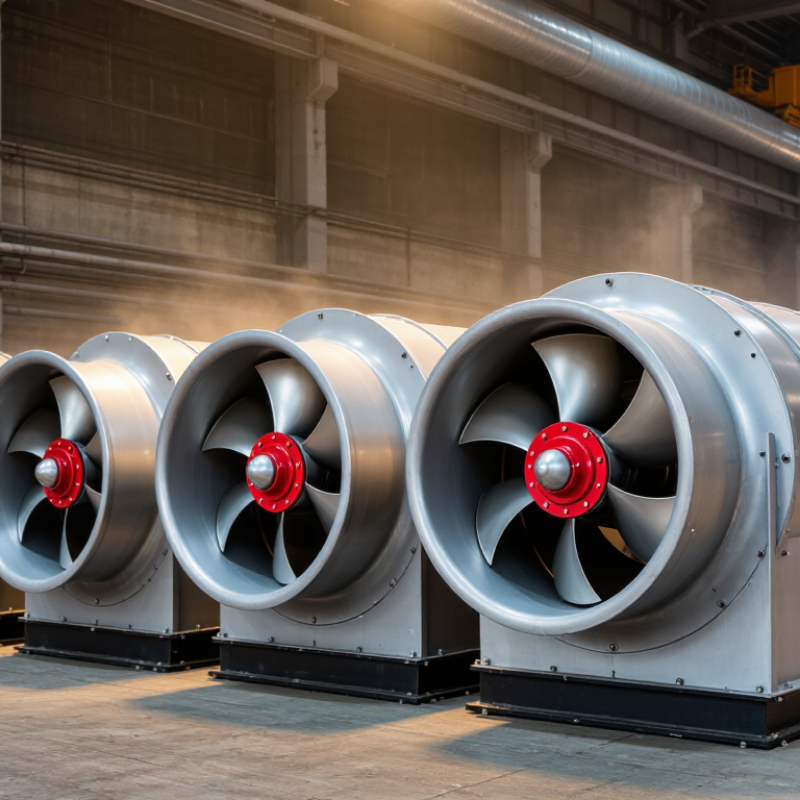
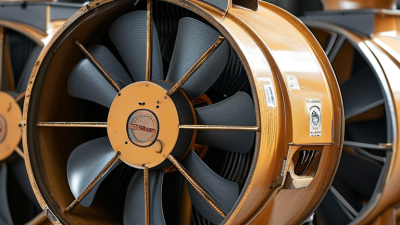
High-temperature fire smoke exhaust axial fans are mechanical devices designed to move hot smoke from fire-affected areas. Unlike ordinary ventilation fans, they use heat-resistant components and motors for demanding emergency conditions. Their axial impeller moves air parallel to the shaft, creating strong airflow through ducts or open exhaust routes. During a fire, they help remove smoke, toxic gases, and excess heat. This supports evacuation and gives firefighters clearer working conditions. The fan does not extinguish flames. Its rated temperature and operating time must match the building’s fire safety design.
In practice, these fans may serve stairwells, underground car parks, tunnels, factories, and large public buildings. A control panel can start the fan automatically after receiving a fire signal. Smoke detectors, emergency switches, and backup power support reliable operation. The system must maintain the required airflow under real pressure conditions. Duct resistance, leakage, and pressure loss can reduce performance. A fan may look powerful but still fail to deliver sufficient extraction. I have seen designs overlook pressure loss at bends and dampers. That mistake can weaken smoke control. Selection should consider airflow, pressure, temperature rating, operating duration, and applicable fire safety requirements. Use tested performance data, not catalogue appearance.
Installation details matter. Correct rotation, secure mounting, balanced impellers, and suitable clearances reduce mechanical problems. Technicians should inspect bearings, wiring, dampers, and emergency controls. No design is flawless. Dust, corrosion, and poor commissioning can defeat good equipment. Regular functional tests reveal these weaknesses early. Test records should include measured airflow, vibration, temperature response, repairs, and power performance. Even small gaps deserve attention.
| Rank | Fan Configuration | Typical Application | Typical Airflow Range | Typical Static Pressure | Typical Impeller Diameter | Fire-Temperature Classification | Reversibility | Primary Function |
|---|---|---|---|---|---|---|---|---|
| 1 | Roof-Mounted Axial Smoke Exhaust Fan | Industrial buildings, warehouses, production halls, and atriums | 10,000–120,000 m³/h | 300–1,200 Pa | 315–1,250 mm | F300: 300°C for 60 or 120 minutes | Usually one-way | Discharges hot smoke vertically through the roof while limiting heat transfer to the motor and surrounding structure. |
| 2 | Wall-Mounted Axial Smoke Exhaust Fan | Factories, loading areas, workshops, and enclosed commercial spaces | 5,000–80,000 m³/h | 200–900 Pa | 315–1,000 mm | F300: 300°C for 60 or 120 minutes | Usually one-way | Extracts smoke horizontally through an external wall and supports rapid smoke-layer clearance. |
| 3 | Reversible Smoke Exhaust Axial Fan | Underground car parks, logistics facilities, and multipurpose halls | 8,000–100,000 m³/h | 250–1,000 Pa | 400–1,250 mm | F300: 300°C for 60 minutes | Yes, with approved reversible impeller design | Provides smoke extraction and normal ventilation in opposite airflow directions when required by the control strategy. |
| 4 | High-Temperature Tunnel Axial Fan | Road tunnels, rail tunnels, and long underground transport passages | 20,000–180,000 m³/h | 500–2,000 Pa | 630–1,600 mm | F400: 400°C for 120 minutes | Often reversible | Supports longitudinal or semi-transverse tunnel smoke-control systems during a fire emergency. |
| 5 | Jet Fan for Car Park Smoke Control | Basement and multilevel car parks | 8,000–45,000 m³/h | 50–300 Pa system thrust equivalent | 315–710 mm | F300: 300°C for 60 minutes | Commonly reversible | Creates directional airflow to move smoke toward dedicated exhaust points without requiring extensive ductwork. |
| 6 | High-Pressure Axial Smoke Exhaust Fan | Long duct systems, high-rise buildings, and large smoke-control zones | 6,000–70,000 m³/h | 800–2,500 Pa | 315–1,000 mm | F300: 300°C for 60 or 120 minutes | Usually one-way | Maintains useful airflow against higher duct, damper, louver, and filter resistance. |
| 7 | Compact Axial Stairwell Smoke Fan | Stairwell, lobby, and protected escape-route ventilation systems | 2,000–20,000 m³/h | 300–1,200 Pa | 250–630 mm | F200: 200°C for 120 minutes | Usually one-way | Provides smoke extraction or pressure-support airflow for protected escape routes, subject to the building design. |
| 8 | Belt-Driven Heavy-Duty Axial Fan | Large industrial halls, process areas, and demanding exhaust installations | 15,000–150,000 m³/h | 400–1,500 Pa | 500–1,600 mm | F300: 300°C for 120 minutes | Normally one-way | Combines high air volume with serviceable drive arrangements for large industrial smoke-extraction duties. |
| 9 | Fire-Rated Duct Axial Fan | Dedicated smoke-exhaust shafts and compartmented commercial buildings | 4,000–60,000 m³/h | 500–1,800 Pa | 315–1,000 mm | F300: 300°C for 60 or 120 minutes | Usually one-way | Moves smoke through a fire-rated duct network while allowing the fan assembly to integrate with dampers and control panels. |
| 10 | Extra-High-Temperature Smoke Exhaust Axial Fan | Special industrial hazards, high-risk process buildings, and large infrastructure projects | 10,000–100,000 m³/h | 500–1,800 Pa | 500–1,400 mm | F400: 400°C for 120 minutes | One-way or reversible, depending on certification | Provides extended emergency smoke extraction where the design fire scenario requires a higher temperature rating. |
High-flow smoke exhaust axial fans provide a dependable solution for fire safety and daily ventilation in commercial and industrial buildings. Manufactured in China with durable, heat-resistant materials, these fans are engineered to maintain stable airflow in demanding conditions. During a fire emergency, they help remove smoke and hot air from enclosed areas, supporting clearer evacuation routes and improving visibility for emergency response teams. Their robust construction and reliable operation make them suitable for basements, parking garages, factories, warehouses, and public facilities.
Designed for practical installation, the compact structure can fit into various ventilation layouts without requiring excessive space. The fan delivers strong airflow while maintaining relatively low operating noise, making it appropriate for both emergency smoke extraction and routine air circulation. Energy-conscious performance and straightforward maintenance can help reduce long-term operating demands. When integrated with suitable fire detection, control, and ventilation systems, this China factory solution offers an efficient way to strengthen building ventilation and support fire protection planning. Its adaptable design allows contractors and facility managers to select configurations that match different airflow requirements and installation environments.
It moves hot smoke along the shaft and discharges it through a controlled airflow path.
Major parts include the impeller, motor, casing, bearings, shaft, terminal box, and thermal protection.
Balanced blades reduce vibration during high-speed operation.
F300 indicates tested operation at 300°C, while F400 indicates tested operation at 400°C.
They should calculate airflow, pressure, leakage, duct resistance, and replacement-air paths.
Verify rotation direction, vibration, emergency power, damper movement, terminals, and bearing condition.
Fire-rated cables and secure terminals help maintain power and control connections during high temperatures. A loose terminal can disrupt the system.
Documents should identify temperature rating, exposure time, airflow, pressure, test conditions, and control compatibility. A neat label may still mislead. Review the assumptions again.
This guide explains how a High Temperature Resistant Fire Smoke Exhaust Axial Fan supports smoke control and emergency ventilation in high-risk buildings. It covers the fan’s definition, operating principles, motor and impeller design, temperature ratings, fire classifications, and relevant safety considerations. Readers will also learn how to assess airflow, pressure, operating duration, structural durability, control systems, and overall reliability when comparing the top 10 fan types for high-temperature smoke exhaust applications.
The article further discusses correct installation, duct arrangement, electrical connections, emergency operation, and system coordination to help maintain effective smoke removal during critical events. It also highlights routine inspection, performance testing, cleaning, lubrication where applicable, and timely replacement of worn components. By following these practical evaluation and maintenance principles, facility managers and engineers can select, install, and operate suitable axial fans with greater confidence, improving system readiness and supporting safer evacuation conditions.