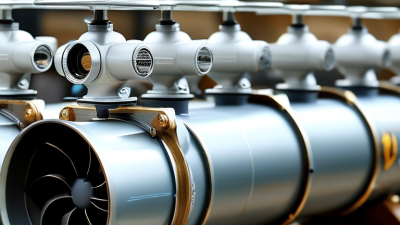
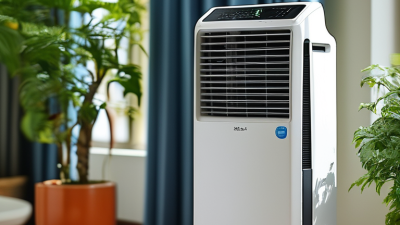
Picking the right type of duct air supply fan isn’t just a matter of popularity or what’s trendy. Honestly, every design is made to handle different pressures, airflow needs, noise levels, space constraints, and maintenance requirements. For example, a small inline fan might be perfect if you’re dealing with a tight ceiling void. On the other hand, a centrifugal unit is often better suited for longer duct runs and higher resistance. The details really do matter here.
Did you know that the International Energy Agency reported that building operations used about 30% of the world's final energy in 2022? And they also accounted for roughly 26% of energy-related emissions — pretty staggering, right? Skipping on proper fan selection can lead to unnecessary energy waste, thanks to things like excessive pressure, leaks, or inefficient motors. The U.S. Environmental Protection Agency points out that indoor pollutant levels can be two to five times higher than outside, sometimes even more. So, these fans don’t just affect your comfort—they’re a key part of energy efficiency and indoor air quality too.
Lidia Morawska, a renowned researcher who specializes in airborne transmission, emphasizes that, “Ventilation is the first line of defense against airborne transmission.” I think that really puts things into perspective. It’s a good reminder not to just focus on how much air a fan can move. Many folks overlook the fact that real-world projects involve filters, dampers, bends, vibration issues, controls, and commissioning. So, even if a fan scores well on its catalog specs, it might turn out to be noisy or disappointing once installed—especially in a ceiling space.
When people look for duct fans, some might be searching for something like “HVAC duct fans inline,” while others need mixed-flow, axial, or backward-curved centrifugal fans. Honestly, the best pick comes down to verified working conditions rather than just shiny specs. This guide walks you through ten major types of fans, highlighting their strengths, limitations, and common uses. The ranking can be helpful, but it’s not set in stone—actual site conditions can totally change what’s best for your project.
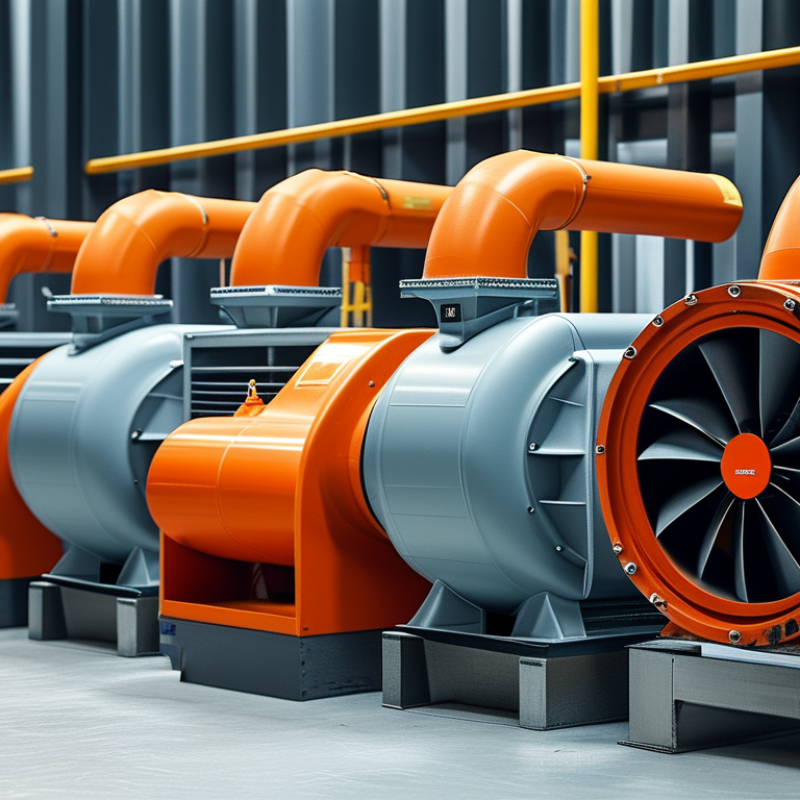
Duct air supply fans move conditioned air from the HVAC unit through filters, coils, and branches. They maintain airflow, pressure, comfort, and indoor air quality. The main ten types include propeller, tube-axial, vane-axial, centrifugal forward-curved, backward-curved, backward-inclined, airfoil, mixed-flow, inline duct, and plenum fans. Each design suits different duties. Axial fans handle high airflow with modest pressure. Centrifugal models manage resistance from long ducts, dampers, and dense filters.
The choice affects more than noise. A poorly selected fan can create weak airflow in a far office, while excessive pressure may whistle through a ceiling diffuser. Practical selection requires airflow volume, static pressure, sound level, motor efficiency, control range, and maintenance access. The U.S. Department of Energy reports that fan systems can represent a significant share of commercial building electricity use, especially when systems run continuously. The International Energy Agency’s Buildings report also states that buildings consume about 30% of global final energy. Small efficiency gains matter.
Air Conditioning Fans now commonly use variable-speed control, allowing output to follow occupancy and filter loading. That reduces unnecessary power, although savings depend on correct commissioning. Field experience shows that clean filters and balanced branches often improve comfort more cheaply than replacing equipment. No list is perfect. Climate, duct geometry, and operating schedules can change the answer. Engineers should verify selections against recognized HVAC standards and measured site conditions, not catalogue ratings alone.
Understanding duct air supply fans helps HVAC designers match airflow, pressure, noise, and installation requirements. The chart compares representative upper-end total-pressure levels commonly encountered in HVAC applications.
Higher-pressure fans are generally selected for systems with longer duct runs, filters, coils, dampers, or other resistance. Actual selection depends on the required airflow, system pressure drop, efficiency, sound level, and available installation space.
What Are the Top 10 Types of Duct Air Supply Fans?
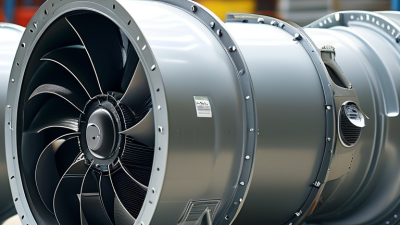
Duct air supply fans are classified by airflow path, pressure, installation, and control method. The main ten types include axial, centrifugal, mixed-flow, inline, roof-mounted, cabinet, plug, vane-axial, backward-curved, and forward-curved fans. Axial Hvac Fans move air parallel to the shaft and suit high-volume, low-to-medium-pressure systems. Centrifugal fans turn airflow outward, making them useful for longer ducts and higher resistance.
Pressure is often the decisive factor. A fan serving a clean, short duct may need less static pressure than one connected to filters, coils, dampers, and acoustic lining. Forward-curved wheels can provide compact airflow, while backward-curved wheels often deliver better efficiency at higher pressure. Mixed-flow designs balance both behaviors. Cabinet and inline fans simplify installation where ceiling space is limited. Roof-mounted units reduce indoor mechanical-room demand, but weather exposure requires careful material selection.
Control method also changes classification. Variable-speed drives can adjust airflow as filters load or occupancy changes. The U.S. Department of Energy identifies fan systems as a significant efficiency opportunity in commercial facilities, while the IEA’s 2023 buildings analysis reports that buildings consume about 30% of global final energy. Testing matters. AMCA 210 and ISO 5801 establish recognized fan-performance methods, yet published results are not always directly comparable. I have seen selections fail because engineers compared airflow only. That is an easy mistake. Actual design should review sound, motor efficiency, operating point, maintenance access, and life-cycle energy.
The Top 10 Types of Duct Air Supply Fans Explained
Duct air supply fans differ in pressure, noise, airflow control, and installation space. Forward-curved centrifugal fans suit low-pressure systems and compact air-handling units. Backward-curved fans deliver better efficiency at higher pressure. Airfoil centrifugal fans use shaped blades and usually create less turbulence. Radial-blade fans handle dustier air, but they can be louder. Mixed-flow fans combine axial airflow with centrifugal pressure. Propeller fans move large air volumes at low pressure. Tubeaxial fans fit straight duct runs and offer simple maintenance. Vaneaxial fans add guide vanes for stronger pressure performance. Inline centrifugal fans work well between duct sections. Plug or plenum fans discharge directly into a cabinet without a traditional scroll housing.
The choice should follow measured system resistance, not habit. The U.S. Department of Energy reports that motor-driven equipment represents about 68% of industrial electricity use, making fan efficiency important. AMCA fan-law guidance shows that power can rise roughly with the cube of speed. A small speed increase can become an expensive mistake. ASHRAE Handbook guidance also stresses airflow balance, sound levels, filtration, and access for service. Cooling Tower Fans belong to a related category, but their open-air duty differs from sealed duct supply. A technician should check the fan curve at the actual operating point. Real installations rarely match the drawing perfectly. Poorly sized dampers, dirty filters, and sharp elbows can quietly reduce performance.
| Fan Type | Airflow Range | Typical Static Pressure | Typical Efficiency | Best-Suited Duct System | Main Advantages | Key Limitations |
|---|---|---|---|---|---|---|
| Propeller Fan | 500–80,000 m³/h | Up to 150 Pa | 30–55% | Short, low-resistance duct runs and make-up air systems | Simple construction, low purchase cost, and high airflow at low pressure | Performance drops quickly as duct resistance increases; relatively high noise at high speed |
| Tube-Axial Fan | 1,000–100,000 m³/h | 100–1,000 Pa | 45–70% | Straight duct sections, ventilation systems, and process-air applications | Compact in-line arrangement and greater pressure capability than a basic propeller fan | Usually less efficient and noisier than well-designed centrifugal fans at higher pressure |
| Vane-Axial Fan | 2,000–150,000 m³/h | 300–2,000 Pa | 55–80% | Large commercial, industrial, and long straight-duct installations | Guide vanes improve pressure rise, efficiency, and airflow control | Requires careful system balancing; can be sensitive to disturbed inlet airflow |
| Forward-Curved Centrifugal Fan | 500–60,000 m³/h | 300–1,500 Pa | 50–70% | Compact air-handling units and moderate-pressure HVAC systems | Quiet operation at moderate speeds, compact size, and strong airflow capacity | Less suitable for dirty air; power demand can rise rapidly with excessive airflow |
| Backward-Inclined Centrifugal Fan | 1,000–150,000 m³/h | 500–2,500 Pa | 65–85% | Commercial HVAC, clean-air supply, and medium-to-high-pressure ductwork | Good efficiency, stable performance, and generally non-overloading power characteristics | Larger housing and higher initial cost than basic forward-curved designs |
| Airfoil Centrifugal Fan | 5,000–200,000 m³/h | 800–3,000 Pa | 75–88% | Large air-handling units, clean industrial ventilation, and energy-sensitive systems | Very high efficiency, low operating cost, and comparatively low aerodynamic noise | Higher cost, larger footprint, and reduced suitability for abrasive or heavily contaminated air |
| Mixed-Flow Fan | 500–25,000 m³/h | 200–1,200 Pa | 55–75% | Compact duct systems where both airflow and moderate pressure are required | Smaller than many centrifugal alternatives while providing better pressure capability than axial fans | Operating range and control flexibility vary significantly with impeller design |
| Inline Centrifugal Fan | 300–20,000 m³/h | 200–1,500 Pa | 55–80% | Space-constrained supply, exhaust, and heat-recovery duct systems | Easy in-line installation, compact layout, and suitable performance for many building services | Access for cleaning and maintenance may be limited after installation |
| Plug Fan | 2,000–200,000 m³/h | 500–3,000 Pa | 65–85% | Modular air-handling units, variable-air-volume systems, and fan-wall assemblies | Flexible installation, direct-drive design, good controllability, and no scroll housing requirement | Needs suitable inlet and outlet airflow conditions; poor layout can increase turbulence and noise |
| EC Motorized Duct Fan | 100–15,000 m³/h | 100–1,500 Pa | 60–85% system efficiency | Demand-controlled ventilation, energy-efficient buildings, and smaller duct systems | Integrated speed control, efficient part-load operation, soft starting, and easy automation | Higher equipment cost and dependence on electronic controls and compatible power quality |
Note: The airflow, pressure, and efficiency figures are representative design ranges for commonly applied duct supply fans. Actual performance depends on impeller geometry, fan speed, motor selection, air density, system resistance, and installation conditions.
Fan selection changes when performance, efficiency, and noise receive equal attention. The ten common types include forward-curved centrifugal, backward-curved centrifugal, airfoil centrifugal, inline centrifugal, mixed-flow, tube axial, vane axial, propeller, plug, and plenum fans. Centrifugal designs usually handle higher duct resistance. Backward-curved and airfoil models often deliver strong efficiency with steadier sound levels. Forward-curved fans suit compact systems, but their power use can rise near overload conditions. Inline centrifugal fans save space and perform well in longer duct runs. Mixed-flow units balance pressure and airflow. Tube axial and vane axial fans move large volumes efficiently, though blade noise may become noticeable. Propeller fans are economical for low resistance. Plug and plenum fans offer flexible layouts, but installation quality strongly affects results.
Measured performance matters more than catalog promises. Check airflow, static pressure, electrical input, and sound pressure at the same operating point. A quiet fan can become loud when dampers close or filters load. That detail is often missed.
In occupied offices, airfoil centrifugal and carefully selected inline fans may provide the best comfort. In industrial spaces, axial fans can deliver useful airflow with less initial cost. However, “efficient” does not always mean “quiet.” Room acoustics, vibration isolation, and duct lining influence perceived noise. My field preference is to compare actual duty points, not only maximum ratings.
Tips: Leave adjustment room below the fan’s maximum capacity. Use flexible connectors and balanced supports to reduce vibration. Recheck filters and belts during commissioning. If noise remains high, inspect turbulence near elbows and dampers before replacing the fan. Even experienced designers can underestimate installation effects.
Selecting the right duct air supply fan begins with airflow, pressure, and operating hours. Common options include centrifugal, axial, mixed-flow, inline, roof, jet, plenum, EC, backward-curved, and forward-curved fans. Each design behaves differently inside a real duct system. The U.S. Department of Energy reports that fan systems can represent about 20% of commercial building electricity use. Small efficiency gains can therefore reduce long-term operating costs.
Start with the duty point, not the catalogue title. Measure required airflow in cubic feet per minute and total pressure in inches of water gauge. Then check temperature, humidity, filtration, noise, and available space.
Backward-curved centrifugal fans suit higher resistance and stable pressure.
Axial fans may fit large airflow with limited pressure.
Inline mixed-flow fans often balance compact installation and moderate noise.
EC motors can improve part-load efficiency, but control compatibility must be verified.
ASHRAE Standard 90.1 emphasizes efficient fan power and system-level design, not fan efficiency alone.
Tips:
Keep the fan near its peak-efficiency region. Compare sound levels at occupied spaces. Allow access for belt, bearing, and filter maintenance. Test the installed airflow after commissioning. Real projects rarely fit perfectly. A clean selection can still fail when filters become blocked or ducts leak. I have seen oversized fans waste energy through throttling, even when their efficiency curves looked impressive. Choose controls, sensors, and duct dimensions together.
Duct air supply fans are essential for balanced airflow, pressure control, and indoor comfort. Among the many Hvac Fans And Blowers options, the correct unit depends on duct size, airflow demand, noise limits, and available space. Before installation, technicians should confirm the fan’s capacity against measured system resistance. Oversizing can waste energy and create uncomfortable drafts. Undersizing may leave distant rooms poorly ventilated.
Installation quality affects long-term performance. Use flexible connectors where vibration could travel through metal ductwork, and secure access panels for future inspection. Keep the fan level, especially when condensate or nearby moisture is present. Electrical connections must follow local requirements and be completed by qualified professionals. A clean filter reduces motor strain, but filters are often ignored. That small mistake becomes expensive. In practice, even experienced installers sometimes underestimate clearance around the service side.
Tips: Record airflow, sound levels, and motor current after commissioning. Check belts, bearings, fasteners, and electrical terminals during scheduled maintenance. Remove dust from blades and grilles with a soft brush or vacuum. Do not lubricate sealed bearings unless the manufacturer permits it. Listen for new rattling or humming; unusual sound often appears before visible damage. A simple maintenance log helps reveal repeated problems, although it may not explain every failure. Recheck dampers after building changes, because renovations can alter pressure and airflow.
: It moves conditioned air through filters, coils, ducts, and ceiling diffusers. It maintains airflow and room comfort.
Propeller and axial fans often suit high airflow with limited pressure resistance. They work best in simpler duct paths.
Centrifugal fans handle resistance from long ducts, dampers, sharp elbows, and dense filters. Backward-curved models usually perform well at higher pressure.
Begin with required airflow and total system pressure. Then check temperature, humidity, noise, space, controls, and operating hours. Do not rely on the catalogue title alone.
An oversized fan may waste energy through throttling and create excessive pressure. A ceiling diffuser might whistle. Bigger is not always better.
Yes, variable-speed control can reduce output during low occupancy or clean-filter conditions. Savings depend on proper commissioning and compatible sensors.
Replace blocked filters, inspect belts and bearings, and check duct leakage. Balanced branches can improve a distant office without replacing equipment. Simple work matters.
Actual ducts rarely match drawings perfectly. Technicians should measure airflow, pressure, sound, and control response after installation. A good design can still fail onsite.
Duct Air Supply Fans are essential HVAC components that move conditioned air through ductwork, helping maintain comfortable temperatures, proper ventilation, and healthy indoor air quality. This article explains how these fans are classified by airflow direction, pressure capability, construction, drive system, and installation position. It examines ten common types, including axial, centrifugal, mixed-flow, inline, roof-mounted, and energy-efficient variable-speed designs, highlighting their typical applications and operating characteristics.
The comparison also considers airflow performance, energy consumption, pressure handling, sound levels, and control flexibility. Selecting the right fan depends on duct layout, required airflow, static pressure, available space, environmental conditions, and comfort expectations. Proper installation is equally important, requiring secure mounting, balanced connections, suitable vibration control, and correctly sized electrical systems. Regular inspection, cleaning, lubrication where applicable, belt or bearing checks, and timely replacement of worn components can improve reliability, reduce noise, and extend the service life of Duct Air Supply Fans.