



The Core Role of MAU (Modular Air Handling Unit) in Modern Clean Environment Systems
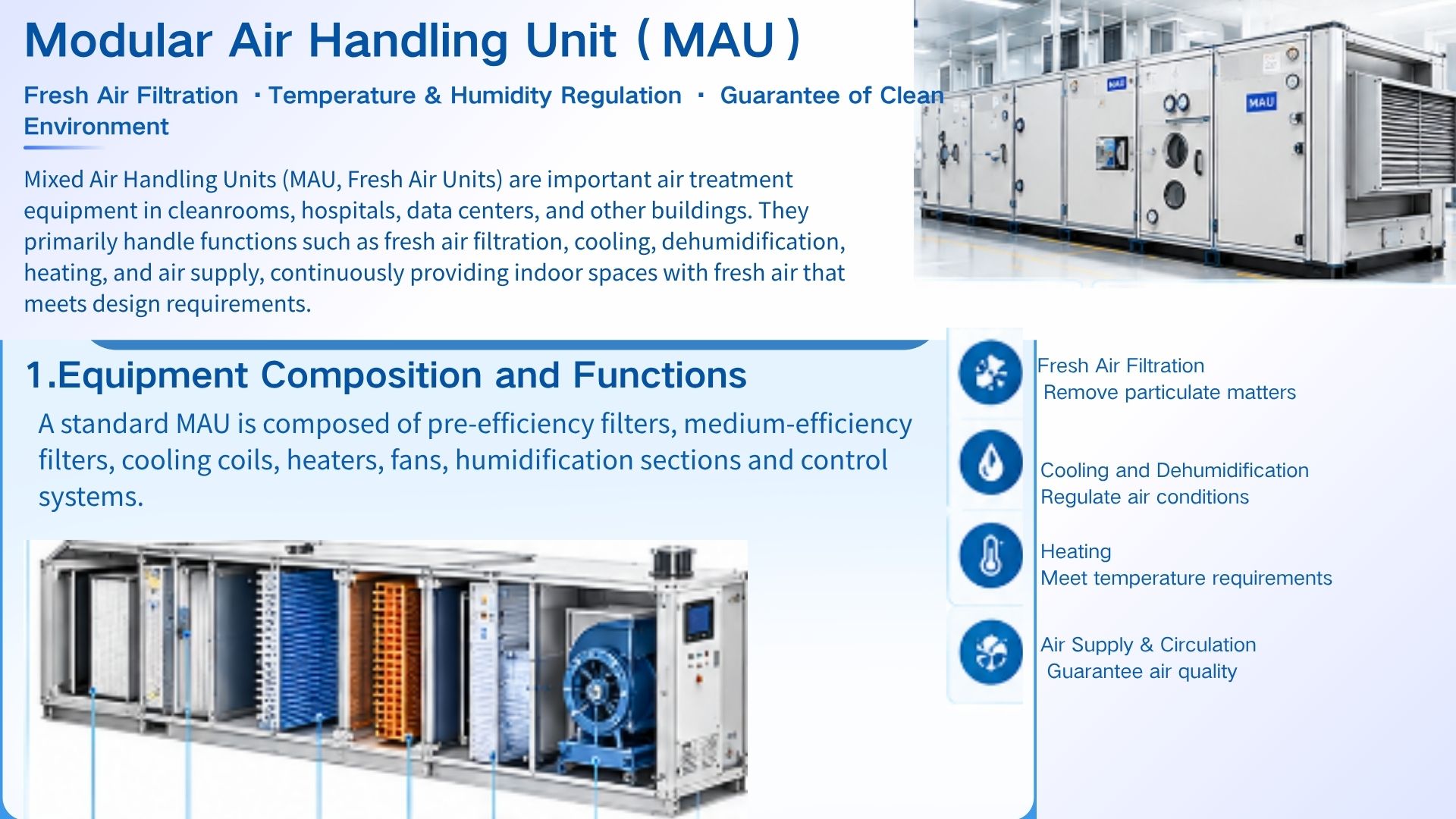
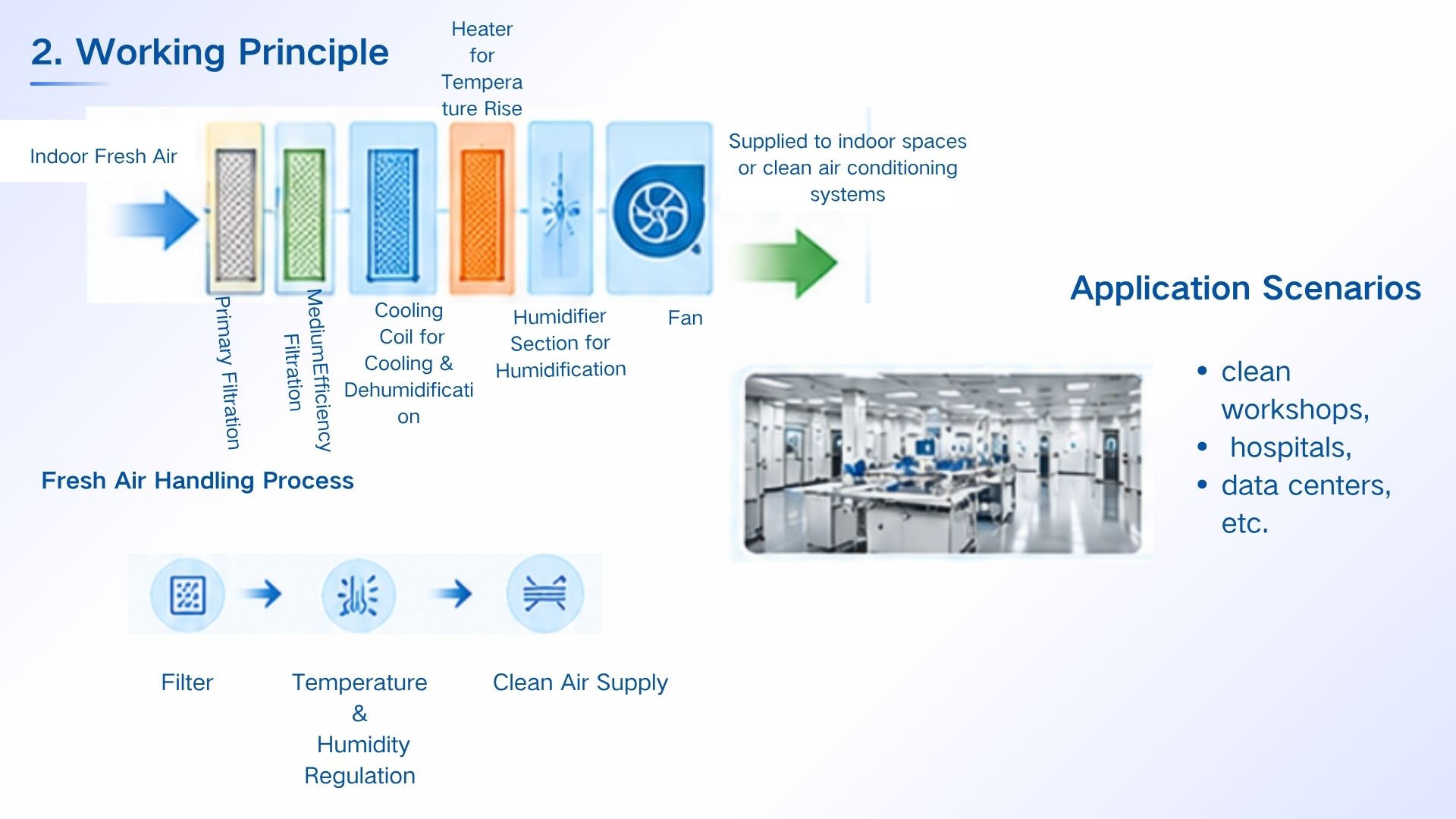
Standard modular MAUs feature a sectional design equipped with comprehensive functional modules to meet diverse environmental conditioning requirements.
Key components include primary and medium-efficiency filters, cooling coils, electric or water heaters, fixed-speed or variable-frequency fans, humidification sections, and integrated intelligent control systems. The air treatment process strictly adheres to principles of physical purification and thermodynamics: outdoor fresh air enters the unit and passes through multi-stage filtration to remove large dust particles, pollen, and outdoor pollutants. Following initial purification, the system precisely adjusts the air's temperature and humidity based on real-time weather conditions and indoor load requirements—cooling and dehumidifying during hot, humid summers, and heating and humidifying during cold, dry winters. The conditioned fresh air is then smoothly delivered to indoor areas or downstream clean air conditioning systems, facilitating overall indoor air circulation and exchange.
In cleanrooms and high-precision industrial settings, MAU performance directly determines the operational efficiency of the entire clean environment system.
Beyond merely improving indoor air quality, the MAU performs three critical control tasks: maintaining stable indoor temperature and humidity, preserving a stable positive room pressure, and continuously renewing indoor air. Robust, professional fresh air handling capabilities are essential for mitigating environmental fluctuations. Improper MAU selection or insufficient processing capacity can lead to significant indoor humidity swings, reduced air cleanliness, and unstable room pressure differentials. Such anomalies not only compromise the comfort of the working environment but also severely disrupt precision manufacturing processes and the accuracy of experimental data, potentially leading to product defects and equipment malfunctions.
To ensure the system operates stably, efficiently, and with low energy consumption over the long term, the proper selection and optimization of the Make-Up Air Unit (MAU) are crucial in actual engineering projects.
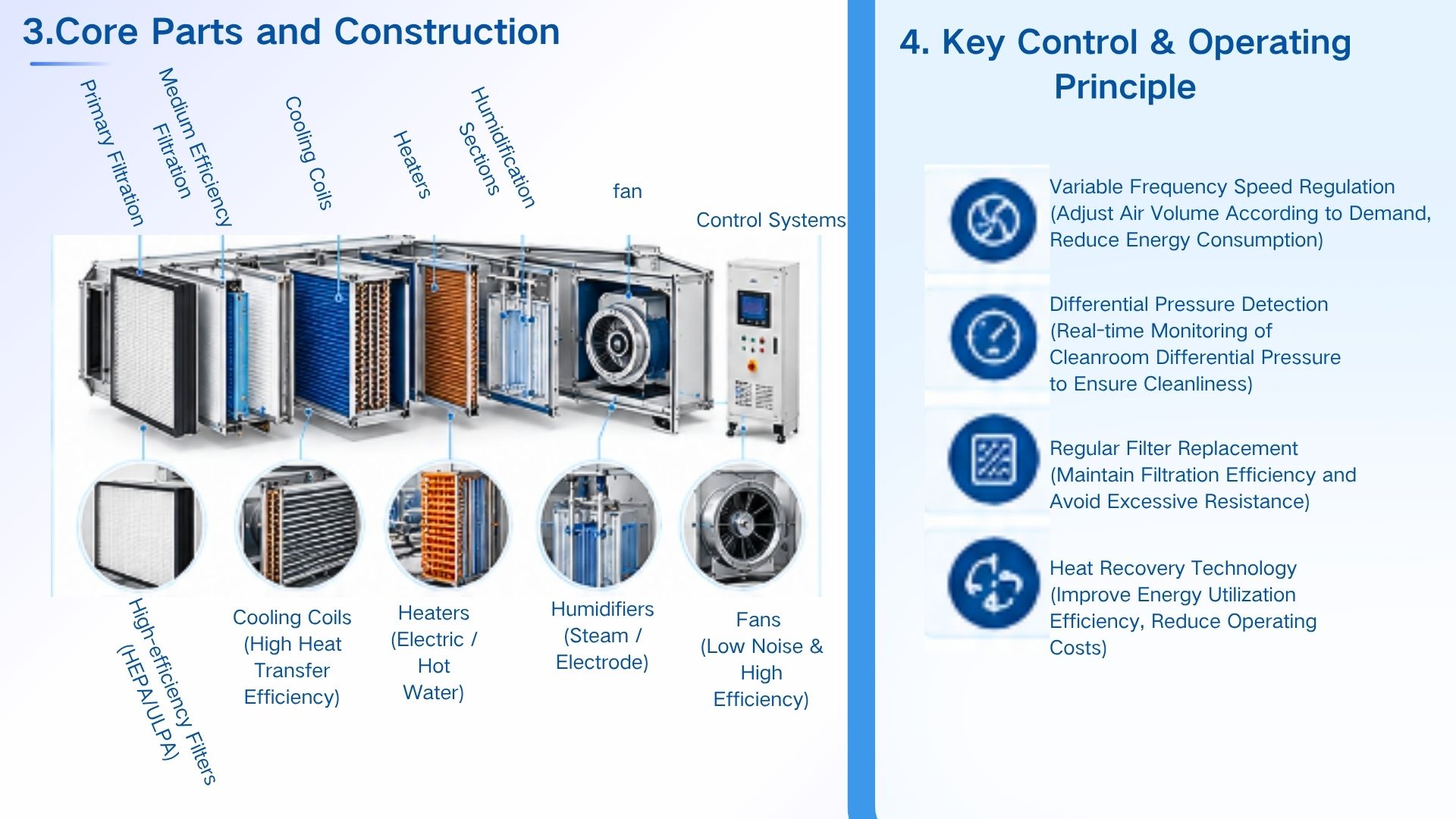
Designers must comprehensively evaluate parameters—such as the building's fresh air requirements, local extreme weather conditions, and operational scenarios across all seasons—to accurately select the unit model and configure its parameters. Furthermore, integrating advanced technologies such as variable frequency drive (VFD) controls, high-efficiency heat recovery modules, and high-grade filtration systems can effectively enhance fresh air treatment efficiency. An optimized design strikes a perfect balance among three core metrics: ultra-clean indoor environmental standards, low daily energy consumption, and long-term operational stability, making it the preferred solution for modern high-end buildings and industrial clean HVAC systems.